
Thursday, October 1, 2009


Monday, September 28, 2009
Infinity and Insanity
 I've just finished reading chapters 2 and 3 of Naming Infinity, a book about mathematics, religious mysticism, and the problem of infinity.
Part of the main thesis of the book is that mathematical advances in the early 20th century were profoundly shaped by cultural and philosophical background. Overall, the book tries to compare the very different approaches of the French and the Russians, contrasting the very rationalist with the very mystical.
Chapter 2, however, starts with the Germans. In a way, I suppose the German mathematicians in this chapter (and the next) come across as in between France and Russia, both in geography and in philosophical approach. The
 whole mess about set theory starts with the work of Georg Cantor, who proves that there are multiple types of infinity.
Entering into Chapter 3, we read that Cantor eventually suffers from mental illness in connection with his studies of infinity. He keeps trying to prove something called the continuum hypothesis, which, as it turns out, is not really provable within the axioms of set theory. Poor guy is chasing a phantom.
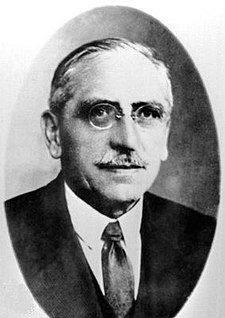
People respond to Cantor's set theory with mixed reactions. One German that is willing to go to bat for him is David Hilbert, who is busy trying to advance an axiomatic approach to mathematics. Also he has a terrific hat in the picture I found on Wikipedia.
This axiomatic approach is culturally much different from the French approach, which stresses the need for a connection between physical reality and mathematics. In 1900 Hilbert proposes that the continuum hypothesis is one of the most important problems in mathematics--a pure mathematical problem, needing no grounding in physics or other sciences.

It is in this mathematical climate that we meet the three star French mathematicians of the book: Emile Borel, Rene Baire, and Henri Lebesgue. All three are very different people, except they do seem to share in common that they were not born into privilege--their mathematical talents caused them to rise to prominence in France.
The French have a cultural commitment to rationalism, inherited from Descartes, as well as positivism, a product of late 19th century philosophy. Under this philosophy, "once science liberates itself from all metaphysical influences and enters the 'positive stage,' its goal is no longer a metaphysical quest for truth or a rational theory purporting to represent reality. Instead, science is composed of laws (correlations of observable facts) that can be used by the scientists without regard to the nature of reality."
Contrast this with Cantor, whose struggles with infinity are deeply metaphysical and even religious. This is a foretaste of how the Russians will deal with the issues of set theory. But in the meantime, this "French trio" sets out with their own brilliance, eventually hitting a wall of mystery and frustration.
 Despite the fact that Borel, Baire, and Lebesgue all make deep discoveries that move the study of infinity forward, eventually they all reject some basic notions of infinite set theory.
Ernst Zermelo (another mischievous German) comes up with this notion of the "axiom of choice," which all three of the French trio reject.
Kind of bizarre for me to read, really, because the very first day of Real Analysis in grad school was using the axiom of choice to generate a set that isn't Lebesgue measurable. History is full of irony.
In any case, Borel goes all hard-core and starts saying that the only entities that really exist in mathematics are those that can be constructed in finite steps. He abandons his older pursuits and focuses on more "useful" mathematics. Lebesgue can't quite divorce himself from the study of the continuum, but he's rather stuck without certain philosophical tools.
Baire becomes another victim of mental illness in this story of infinity. His already unstable mind isn't helped by the fact that he can't seem to find any way forward through the "intellectual abyss" created by the problem of the infinite.
Meanwhile, lurking around the corner seems to be a glimmer of progress in these Name-Worshiping Russian mathematicians who are about to be introduced in Chapter 4. Their secret seems to lie in being open to precisely what the French are closed off to: allowing metaphysics to mix with mathematics.
This has been a good read so far. It's keeping me awake at night, to be sure. It also makes me hope I don't go crazy. Why is there such a strong connection between mathematics and insanity, anyway?
One thing I'm seeing in these first few chapters is that perhaps there really is a need in all of us to embrace mystery, and accept what we cannot understand. Maybe it really can drive a mind insane to try to iron out all the details of a rational system that may simply have boundaries that we can never see.
Mathematics and mystery... at first they don't seem to go hand in hand, but the more I think about it, the more I think they do.
Anyway, I'm excited to continue on through this book!
Friday, September 25, 2009
Grading
This week has basically been consumed by teaching. I teach a section of Applied Calculus at UVA--it's my first year ever teaching a class. It's quite an experiment, really. Let's take a bunch of grad students, who have been admitted to the PhD program entirely because of academic merit in mathematics and not whatsoever on teaching merit, and throw them in front of some college freshmen (oh, I'm sorry, "first-years," as we say at UVA). Surely some learning will take place.
Tuesday was my students' first of three mid-term exams. I felt like it went well. There's nothing quite like grading an exam. Even in mathematics, it's highly subjective. The only time it isn't subjective is when the answer is entirely correct. I guess that does make it different from, say, grading a paper in philosophy. Is there ever an entirely correct answer in philosophy? This in itself is a philosophical question, of course... but the practical answer is, "no."
Subjectivity naturally comes into play, because for any given problem, a significant percentage of my students will have written something not 100% correct, and then I'm faced with the tricky problem of trying to measure how much understanding the answer communicates. How do you quantify understanding? Sometimes the whole process seems absurd.
I'm conditioned to expect a certain grade distribution, and I can kind of use this expectation to judge the validity of the grades I have come up with for my students. The truth is, though, I desperately try to find things that I can give credit for. Any signs of intelligent thought are rewarded with points.
Mathematics could be the most easily self-regulated discipline in the world. Every mathematician is highly critical by nature. One simply cannot succeed in mathematics without having this irrepressible urge to spot every important detail in a problem and verify it. Thus, if you tell any mathematician to grade a collection of calculus exams, his first inclination is simply to rip every answer to pieces.
Yet that same critical impulse generally causes me to turn inward and ask myself, what purpose would it serve to be hyper-critical of responses on a calculus exam? That combined with a genuine caring for my students as people causes me to try to find the best in every solution.
I never have to worry that I'm being overly generous. It is simply not physically possible for a mathematician to go above a certain threshold in giving credit for only partially correct solutions. The mistakes that appear in answers students give can range from humorous to painful, but in any case I just can't ignore them. No matter how much credit I want to give a student, I am forever bound by a mysterious force beyond my power to be more honest in my grading than perhaps my students would like me to be.
It's pretty brilliant, isn't it? The department never has to look over my shoulder to see if I'm actually being an ethical grader. They know that I am already constrained by a power far greater than any threats that bureaucracy might employ to keep me on track.
All of this is not to say that all of us grad students grade our students the same way. Sometimes we don't agree on what exactly the students are expected to understand about a problem. Math has this attractive quality to it because it is so objective, but setting learning goals for students (and then measuring success) is a more or less entirely subjective matter.
I could make it entirely objective, of course--each answer would be either right or wrong, no in between. But this probably would be the most unethical way to grade, because it would completely rob students of any way to communicate their ability to develop some sort of problem solving strategy, which is actually what we're trying to teach. Math, as it turns out, is not really about the answer.
When it comes right down to it, every academic discipline, math and the hard sciences included, are mostly about creating a dialog about something we wish to understand better. The reason we grade our students is to try to get them to make their ideas clearer, not just "right." There's something deeply personal about the whole thing, actually.
What's sad is how so many students go on asking what's going to be good enough--good enough for you, the teacher, to find them acceptable enough to label with an 'A' so they can go on and accomplish their own goals quite apart from anything you've told them. If only they realized that they'd really earn their 'A' if only they opened themselves up to actually communicating ideas.
I suppose it's really just the difference between being a consumer and thinking of your teacher as a supplier of a good, and being a person and thinking of your teacher as another person. If you're just a consumer, you can certainly get your 'A,' but only because our culture encourages grade inflation (education is subject to market forces, after all). If you really want to understand the material, you have to move from being a consumer to being a real person desiring real communication.
I understand why many students can't move this direction. I'm actually quite okay with most students in my class not caring about math. I'll do my best to be a supplier of a good--maybe if they work hard, I can even supply 'A's for them. There is, after all, a certain level of dignity in that kind of transaction.
But being a teacher, while also being a student, has caused me to reflect that what's really behind all those commands to "show your work" is a desire for something more personal. I wonder if my students will ever get that.
Tuesday was my students' first of three mid-term exams. I felt like it went well. There's nothing quite like grading an exam. Even in mathematics, it's highly subjective. The only time it isn't subjective is when the answer is entirely correct. I guess that does make it different from, say, grading a paper in philosophy. Is there ever an entirely correct answer in philosophy? This in itself is a philosophical question, of course... but the practical answer is, "no."
Subjectivity naturally comes into play, because for any given problem, a significant percentage of my students will have written something not 100% correct, and then I'm faced with the tricky problem of trying to measure how much understanding the answer communicates. How do you quantify understanding? Sometimes the whole process seems absurd.
I'm conditioned to expect a certain grade distribution, and I can kind of use this expectation to judge the validity of the grades I have come up with for my students. The truth is, though, I desperately try to find things that I can give credit for. Any signs of intelligent thought are rewarded with points.
Mathematics could be the most easily self-regulated discipline in the world. Every mathematician is highly critical by nature. One simply cannot succeed in mathematics without having this irrepressible urge to spot every important detail in a problem and verify it. Thus, if you tell any mathematician to grade a collection of calculus exams, his first inclination is simply to rip every answer to pieces.
Yet that same critical impulse generally causes me to turn inward and ask myself, what purpose would it serve to be hyper-critical of responses on a calculus exam? That combined with a genuine caring for my students as people causes me to try to find the best in every solution.
I never have to worry that I'm being overly generous. It is simply not physically possible for a mathematician to go above a certain threshold in giving credit for only partially correct solutions. The mistakes that appear in answers students give can range from humorous to painful, but in any case I just can't ignore them. No matter how much credit I want to give a student, I am forever bound by a mysterious force beyond my power to be more honest in my grading than perhaps my students would like me to be.
It's pretty brilliant, isn't it? The department never has to look over my shoulder to see if I'm actually being an ethical grader. They know that I am already constrained by a power far greater than any threats that bureaucracy might employ to keep me on track.
All of this is not to say that all of us grad students grade our students the same way. Sometimes we don't agree on what exactly the students are expected to understand about a problem. Math has this attractive quality to it because it is so objective, but setting learning goals for students (and then measuring success) is a more or less entirely subjective matter.
I could make it entirely objective, of course--each answer would be either right or wrong, no in between. But this probably would be the most unethical way to grade, because it would completely rob students of any way to communicate their ability to develop some sort of problem solving strategy, which is actually what we're trying to teach. Math, as it turns out, is not really about the answer.
When it comes right down to it, every academic discipline, math and the hard sciences included, are mostly about creating a dialog about something we wish to understand better. The reason we grade our students is to try to get them to make their ideas clearer, not just "right." There's something deeply personal about the whole thing, actually.
What's sad is how so many students go on asking what's going to be good enough--good enough for you, the teacher, to find them acceptable enough to label with an 'A' so they can go on and accomplish their own goals quite apart from anything you've told them. If only they realized that they'd really earn their 'A' if only they opened themselves up to actually communicating ideas.
I suppose it's really just the difference between being a consumer and thinking of your teacher as a supplier of a good, and being a person and thinking of your teacher as another person. If you're just a consumer, you can certainly get your 'A,' but only because our culture encourages grade inflation (education is subject to market forces, after all). If you really want to understand the material, you have to move from being a consumer to being a real person desiring real communication.
I understand why many students can't move this direction. I'm actually quite okay with most students in my class not caring about math. I'll do my best to be a supplier of a good--maybe if they work hard, I can even supply 'A's for them. There is, after all, a certain level of dignity in that kind of transaction.
But being a teacher, while also being a student, has caused me to reflect that what's really behind all those commands to "show your work" is a desire for something more personal. I wonder if my students will ever get that.
Sunday, September 20, 2009
Cereal
This
Is
AWESOME.

The satirical blog that came up with this isn't bad, although committed Calvinists may take offense.
By the way, I was in Geneva last year and saw a genuine Calvin food product--check it out.
Is
AWESOME.

The satirical blog that came up with this isn't bad, although committed Calvinists may take offense.
By the way, I was in Geneva last year and saw a genuine Calvin food product--check it out.
Thursday, September 17, 2009
Name Worshiping
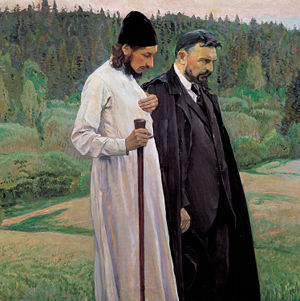 I recently picked up a book I'm really excited about called Naming Infinity. The subtitle sums up why I am so excited: "A True Story of Religious Mysticism and Mathematical Creativity."
Seriously, does it get any more fascinating than that?
I just read the first chapter, which sets the stage in early 20th century Russia, at the intersection of a religious dispute in Eastern Orthodoxy and a mathematical controversy in Europe.
At issue in the Russian Orthodox Church was a group of monks called "Name Worshipers," who supported the practice of the Jesus Prayer--a prayer to be repeated until the worshiper achieves a sort of "mental fusion with God."
The Russian Orthodox Church deemed the practice a heresy, but it turned out to be an inspiration to Russian mathematicians working on important advances in set theory. This interaction between mathematics and religion is intriguing to me.
The first chapter of this book was a really compelling read. It opened with talking about the religious persecution of the "Name Worshipers"--Russian Orthodox monks living in a monastery in Greece--who were violently forced out of their monastery. This was before the revolution, and I suppose the State still felt obligated to do the bidding of the Russian Orthodox Church.
After the revolution in 1917, however, Name Worshiping caught on as an underground movement that captured the attention of intellectuals, including such great mathematicians as Dmitri Egorov, and a student of his, Pavel Florensky.
The chapter ends with a transition into talking about the mathematical controversies of the day regarding mathematical set theory. To see how Name Worshiping could possibly inspired mathematical insights, we read,
Florensky saw a relationship between the naming of "God" and the naming of sets in set theory: both God and sets were made real by their naming. In fact, the "set of all sets" might be God Himself.As out there as this might seem, it's fascinating to me personally because I'm familiar with how central set theory is to modern analysis (which is what I do)--and I'm also fascinated with religious exploration.
I'll try blogging through this book, just because I'm so taken with the story. I also think it could have a lot to say about modern controversies over religion, science, and rational thought.
One thing that's interesting is how these Russian mathematicians rejected Western "positivism," but nevertheless broke with the more traditional approaches to religion to develop new insights.
Perhaps this indicates that we have too few categories here in America when it comes to religion. "Religious" and "skeptic" are hardly adequate. There is such a vast continuum of thought out there.
Monday, September 14, 2009
Prayer for all people
Heavenly Father, God Almighty, Maker of Heaven and Earth, of all that is, seen and unseen,
a God merciful and gracious,
slow to anger, and abounding in steadfast love and faithfulness,
keeping steadfast love for the thousandth generation,
forgiving iniquity and transgression and sin,
yet by no means clearing the guilty,
but visiting the iniquity of the parents upon the children and the children's children,
to the third and the fourth generation,
have mercy on us all.
Out of the depths I cry to you, O Lord. Lord, hear my voice!
Let your ears be attentive to the voice of my supplications!
If you, O Lord, should mark iniquities, Lord, who could stand?
But there is forgiveness with you, so that you may be revered.
Lord, what can I say for the cowardly, the faithless, the polluted, the murderers, the fornicators, the sorcerers, the idolaters, and all liars, when you say their place will be in the lake that burns with fire and sulfur?
Those who have nothing--will you take even what little they have away? Will you throw them into outer darkness, where there will be weeping and gnashing of teeth?
Will you forever fix a chasm between the righteous and the unrighteous, so that the righteous may not bring relief to those being tortured by flames?
How can this be?
For you, O God, did not send your Son into the world to condemn the world, but that the world through Him might be saved.
I know that your light has come into the world, and that people have loved darkness rather than light, because our deeds are evil.
For there is no one who is righteous, not even one;
There is no one who has understanding,
There is no one who seeks God.
All have turned aside, together we have become worthless;
There is no one who shows kindness, there is not even one.
Our throats are opened graves;
We use our tongues to deceive.
The venom of vipers is under our lips.
Our mouths are full of cursing and bitterness.
Our feet are swift to shed blood.
Ruin and misery are in our paths,
And the way of peace we have not known.
There is no fear of God before our eyes.
I know we grieve your heart, O God; you look on us and say, "I am sorry that I have made them."
You say to your servant, "How long will this people despise me? And how long will they refuse to believe in me, in spite of all the signs that I have done among them?"
Have mercy, O God, according to your steadfast love.
According to your abundant mercy, blot out our transgressions.
Wash us thoroughly from our iniquity, and cleanse us from our sin.
Create in us clean hearts, O God,
And put a new and right spirit within us.
Do not cast us away from your presence,
And do not take your Holy Spirit from us.
For then all creation will hear of it; for in your power you created human beings in your image, and all the creation knows that for us and for our salvation you have come among us, taking the form of a human being. If you destroy the disobedient, then all creation will cry out, "It is because the Lord was not able to save the people He created that He has thrown them into the hell of fire."
It is not that I love wickedness, O God.
Do I not hate those who hate you, O Lord?
And do I not loathe those who rise up against you?
I hate them with perfect hatred;
I count them my enemies.
Search me, O God, and know my heart;
Test me and know my thoughts.
It is not because I love wickedness that I pray for all people.
Yet because the wicked are my enemies, I love them, and I pray for them, because that is what your children do, O God.
Therefore forgive all people, for we do not know what we are doing.
I know you do not want any to perish. Have mercy on us all.
No one has ever seen you, O God; in Christ you have made yourself known, but Christ has ascended into heaven.
Be patient with us, O God, and do not condemn, since no one has ever seen you. Manifest yourself in us; let love be perfected in your people, so that the world may know you.
Do not leave us to continue in our errors. Instruct sinners in the way we should go.
In your love make us into something new, for if anyone is in Christ, there is a new creation!
O Lord, I confess that I do not know how to pray as I ought, and I know that I will not be heard for my many words.
Yet I do pray all these things in love, in the name of Christ, trusting in His promise to do anything His followers ask in His name.
Forgive all people, O God, on the day of your judgment, so that there may truly be no more mourning, crying, or pain, when you send your holy city down from heaven.
Let sin, death, mourning and pain all be defeated by your infinite Love, O God.
For the greatest of these is Love.
a God merciful and gracious,
slow to anger, and abounding in steadfast love and faithfulness,
keeping steadfast love for the thousandth generation,
forgiving iniquity and transgression and sin,
yet by no means clearing the guilty,
but visiting the iniquity of the parents upon the children and the children's children,
to the third and the fourth generation,
have mercy on us all.
Out of the depths I cry to you, O Lord. Lord, hear my voice!
Let your ears be attentive to the voice of my supplications!
If you, O Lord, should mark iniquities, Lord, who could stand?
But there is forgiveness with you, so that you may be revered.
Lord, what can I say for the cowardly, the faithless, the polluted, the murderers, the fornicators, the sorcerers, the idolaters, and all liars, when you say their place will be in the lake that burns with fire and sulfur?
Those who have nothing--will you take even what little they have away? Will you throw them into outer darkness, where there will be weeping and gnashing of teeth?
Will you forever fix a chasm between the righteous and the unrighteous, so that the righteous may not bring relief to those being tortured by flames?
How can this be?
For you, O God, did not send your Son into the world to condemn the world, but that the world through Him might be saved.
I know that your light has come into the world, and that people have loved darkness rather than light, because our deeds are evil.
For there is no one who is righteous, not even one;
There is no one who has understanding,
There is no one who seeks God.
All have turned aside, together we have become worthless;
There is no one who shows kindness, there is not even one.
Our throats are opened graves;
We use our tongues to deceive.
The venom of vipers is under our lips.
Our mouths are full of cursing and bitterness.
Our feet are swift to shed blood.
Ruin and misery are in our paths,
And the way of peace we have not known.
There is no fear of God before our eyes.
I know we grieve your heart, O God; you look on us and say, "I am sorry that I have made them."
You say to your servant, "How long will this people despise me? And how long will they refuse to believe in me, in spite of all the signs that I have done among them?"
Have mercy, O God, according to your steadfast love.
According to your abundant mercy, blot out our transgressions.
Wash us thoroughly from our iniquity, and cleanse us from our sin.
Create in us clean hearts, O God,
And put a new and right spirit within us.
Do not cast us away from your presence,
And do not take your Holy Spirit from us.
For then all creation will hear of it; for in your power you created human beings in your image, and all the creation knows that for us and for our salvation you have come among us, taking the form of a human being. If you destroy the disobedient, then all creation will cry out, "It is because the Lord was not able to save the people He created that He has thrown them into the hell of fire."
It is not that I love wickedness, O God.
Do I not hate those who hate you, O Lord?
And do I not loathe those who rise up against you?
I hate them with perfect hatred;
I count them my enemies.
Search me, O God, and know my heart;
Test me and know my thoughts.
It is not because I love wickedness that I pray for all people.
Yet because the wicked are my enemies, I love them, and I pray for them, because that is what your children do, O God.
Therefore forgive all people, for we do not know what we are doing.
I know you do not want any to perish. Have mercy on us all.
No one has ever seen you, O God; in Christ you have made yourself known, but Christ has ascended into heaven.
Be patient with us, O God, and do not condemn, since no one has ever seen you. Manifest yourself in us; let love be perfected in your people, so that the world may know you.
Do not leave us to continue in our errors. Instruct sinners in the way we should go.
In your love make us into something new, for if anyone is in Christ, there is a new creation!
O Lord, I confess that I do not know how to pray as I ought, and I know that I will not be heard for my many words.
Yet I do pray all these things in love, in the name of Christ, trusting in His promise to do anything His followers ask in His name.
Forgive all people, O God, on the day of your judgment, so that there may truly be no more mourning, crying, or pain, when you send your holy city down from heaven.
Let sin, death, mourning and pain all be defeated by your infinite Love, O God.
For the greatest of these is Love.
Wednesday, September 9, 2009
Secular ProLife
 Students for Life of America is trying to reach a maximal audience by branching out toward the secular side of the abortion issue. A recent e-mail from them linked to the web site SecularProLife.org, which has as its subtitle, "Pro-life for a reason."
I have to say, that subtitle made me smile.
As their description on facebook says,
SecularProLife.org exists to promote secular pro-life arguments and fight the media portrayal of pro-lifers as "religious extremists." The scientific facts support our cause- let's use them!Although this group is just getting off the ground, I'm encouraged by their mere existence. In order to defend innocent human life, it is necessary to break down the walls of rhetoric that the pro-"choice" movement has made over the years.
We are not anti-religion. We welcome people of all faiths, atheists, agnostics, etc. We don't get involved with things like the pledge of allegiance, gay marriage, or In God We Trust on coins. SecularProLife.org is dedicated solely to issues of life and death.
Specifically, the separation of church and state should not be given as a reason to defend abortion. The pro-life position on abortion is non-sectarian. It is not based on any specific doctrine of any religious denomination. It is based on good scientific evidence and one basic moral principle: that all human beings deserve the chance to live.
In honor of SecularProLife.org, I decided to write my top reasons why I don't use the Bible to defend the unborn. I'm sure this list will scandalize some Christians, but I feel like this stuff needs to be said--if for no other reason than that innocent children should not have to die because we can't agree on a single religion.
Top 5 reasons I don't use the Bible to defend the unborn
- Non-Christians don't care about the Bible. This sounds really straightforward, but sometimes it feels like conservative politicians forget this.
- Christians don't care about it, either. That's right, I said it. The fact is, about half the country doesn't agree with the pro-life position on abortion. About 80% of the country is Christian. That means there have to be plenty of Christians out there who are pro-choice; what are you going to do about it? Quoting scripture probably isn't doing the trick. Maybe they're from a more liberal mainline denomination that doesn't interpret scripture like you do. Or maybe one of the other reasons below has something to do with it.
- The Bible doesn't even mention abortion. There is no commandment given by God in the Bible that prohibits, specifically, killing a child in the womb. Of course, "Thou shalt not kill," but everyone already agrees with that. Defining the word "kill" can be tricky, though, and unfortunately the Bible doesn't give us straightforward guidance on the issue. (Phrases often quoted such as "Before I formed you in the womb, I knew you," when read in context, are not at all about the life of the unborn.)
- The Bible may even find abortion acceptable. There are some interpretations of Exodus 21:22 that find no legal rights given to the unborn (see the NRSV). Whether this is true or not is not mine to say, but I have wondered many times about this verse.
- The scientific facts are more compelling than the Bible. Consider one of the most often quoted passages of scripture used in pro-life circles:
For you formed my inward parts;
This actually gives an image of life in the womb that is misleading and could suggest that unborn children are nothing more than bits and pieces being "knitted together." Other than for fear of defying God's sovereignty, why not "abort" such a creature? If growth in the womb is really a process of parts being put together, then maybe it's not too late to "abort" such a process.
you knitted me together in my mother’s womb. (Psalm 139:13)
The scientific image, on the other hand, is one of continual growth. From the moment of conception, a human being in the womb is doing what humans do--growing, consuming nutrients, and struggling to survive. All the various parts of the human body naturally differentiate (very quickly!) from stem cells. From the time you're about 8 weeks old in the womb, you already have major vital organs--a heart, a brain, something like lungs--and even more, you have fingers, toes, and eyes that are not much more than little buds. All of these parts will grow--they won't be "put together." You are a complete organism from day 1.
So there you have it. I will say that there is a right way to use the Bible in defense of the unborn: to inspire hope, to motivate change, and to provide a foundation for compassionate ministry to women in need of better options than abortion.
With that, I think there's one scripture passage that reminds me that I need to speak out on this issue, whether or not I use the Bible to do it:
If you faint in the day of adversity,
your strength being small;
if you hold back from rescuing
those taken away to death,
those who go staggering to the slaughter;
if you say, "Look, we did not know this"--
does not he who weighs the heart perceive it?
Does not he who keeps watch over your soul know it?
And will he not repay all according to their deeds? (Proverbs 24:10-12)
Subscribe to:
Posts (Atom)