I wanted to develop a thought from yesterday on providence and free will. But where to start...
Imagine a world governed entirely by God's arbitrary will, that is, with no discernible regularities in it. Everything is an immediate invention of God's mind and need not have any connection with anything before or after. One is tempted to say that we would have no free will in that case, as an immediate corollary. But then, a compatibilist view of free will, in which human agency does not contradict determinism (which latter could be the result of scientific or theological suppositions), might still hold in such a universe. God could give each of us the sensation of having free will, producing in us the experience of making decisions and having some perceptible impact on our environment. If that doesn't sound like genuine free will to you, then I guess you're not a compatibilist. (I'm not either.)
Anyway the real problem isn't whether we might have the sensation of a will of our own. The real problem is that we couldn't possibly learn or understand anything. Learning is always a matter of seeing connections between things. We find causal or logical relationships between events and concepts, we perceive similarities and differences allowing us to categorize things and experiences, and in so doing we build a web of knowledge. Now if God were always there to possibly interrupt all such connections, we would have no choice but to view life as fundamentally absurd. Learning would be not just pointless, but impossible. Scientific knowledge (in the modern sense) would be impossible, since repeated experiments would not necessarily yield the same results. Personal relationships would be just as impossible, since the bond of trust could never exist in a world without predictable patterns.
Only if God's will is bound by definite patterns that are in some sense universal can human beings come to understand the world as such. This fact need not infringe on God's supremacy. Those patterns could have their origin in God's own will or character. The point is not to say what God must be like in any conceivable universe, but rather to say what He must be like given that we exist.
By contrast, a world completely governed by unchanging laws is, ironically, the most fertile ground for free will. In this case the mind can discern order in the universe, because it is actually there. We acquire knowledge through experience and memory. Memory doesn't fail us because the present really is connected to the past, and experience doesn't fail us because there is a true link (causal, rational) between our actions and their consequences. One potential irony is that we ourselves are governed by physical laws, and so arguably we aren't genuinely free; all our decisions are perhaps the inevitable result of evolution given certain initial conditions. Or maybe not. It is entirely conceivable that in a world governed by universal physical laws, there may exist rational beings with the power to choose between several physical possibilities; by what logical principle must a physical law allow at most one outcome for each initial condition? The universe still remains intelligible if possibilities are limited in a consistent way.
What impresses me the most is the analogy that exists between this seemingly abstract consideration and real world politics. In free societies, laws are consistently applied, so that individual members can be assured that if they abide by a certain base line code of conduct, they will be free to pursue their own ends. In tyrannical societies, it is often observed, a general atmosphere of suspicion falls on the entire people. The concept of truth itself becomes degraded. When the actions of the state are totally unpredictable, people resign themselves to a life with no intelligible order. Only might makes right.
Is God a god whose might makes right? In the world we actually live in, certainly not. We live in a universe so well ordered by laws that those who understand them may question the existence of any exceptions whatsoever. In other words, in a world where scientists tend not to believe in miracles, you can be assured that God is not a tyrant. On the contrary, you might criticize Him for being too libertarian. But for the Christian who believes that everything in the universe is under God's control, these universal laws become windows into His character. There is, presumably, a reason why He adheres to these laws in particular. Reflecting on those reasons can be particularly painful when the consequences of said laws seems so devastating. It hardly seems comforting to think that God is in control of tsunamis that wipe out hundreds of thousands of mostly innocent people, or that He is in control of diseases that kill millions of people every year. Why can't He break these laws for our sake, that is, for the sake of justice?
I think part of the resolution of such questions lies in God's ultimate destiny for human beings, and part lies in the inherent goodness of the entire created order (why should the wind and waves stop because we want them to leave us alone?). But another important factor is, I wager, our capacity for freedom. God knows that the only way for rational minds to exist in the created world is for the order of creation to be consistent. We would not be able to discern His character if He erratically imposed His will on us. Instead, He acts toward us according to a coherent set of principles, allowing us to accumulate knowledge of Him and His creation. In so gaining understanding, it's worth restating that we also become more free to pursue our own ends. It would appear that God values our freedom, the kind that comes from learning and growing in wisdom.
I make no attempt to actually address the classical problem of "free will" here. I am more interested in the nature of God's providence as it relates to our freedom. As best I can tell, it matters for our freedom what kind of control God exercises over the world, and it seems to me that the kind of control He in fact does exercise permits the growth of free, rational minds. This says a great deal about the purpose of creation. It says also a great deal about our purpose as rational beings.
Showing posts with label free will. Show all posts
Showing posts with label free will. Show all posts
Thursday, December 22, 2016


Sunday, December 4, 2016
What is a person?
Once my wife and I were musing on the fact that we don't remember anything from before we were three or four years old. My wife hypothesized that during the first three years of life, the brain is too plastic to form any long lasting memories. On the other end, as we age the mind can become calcified, losing the ability to make new memories for essentially the opposite reason.
Science may have various things to say about this, but my reflections led me to contemplate the idea of personhood. Our identity has to do with striking the right balance between freedom and definition. What I think of as the "self" is a character gradually constructed from a series of experiences, actions, decisions.... It's important that these experiences be coherent, so my freedom to decide is not absolute. On the other hand, it's important that I be the one truly acting, so that one cannot simply deduce my next move from some abstract understanding of my nature.
For example, if I suddenly decided to abandon human civilization and go live in the forest, without any prior indication that such a decision was consistent with my values or desires, my family and friends would think I had gone insane, with good reason. Sudden shifts in our personality are considered disorders. We treat them, not because we want to squelch a person's true identity but rather because we want to liberate it. If our decisions are totally random with no coherence at all, we have no more identity than we would if we were mere particles subject to deterministic laws.
Such is the delicate balance that defines a person. Some have personalities which are far more dynamic than others; they constantly reinvent themselves. Others are more conservative, content with their habits and resistant to change. But go too far in either direction, and what you have is a tragedy. It is heartbreaking to see a person instantly change into "someone else." We feel that person has truly died. And it can be equally painful to watch someone who, as they age, becomes incapable of embracing anything new whatsoever, to the point of being unable to recognize new people they meet or retain any memories but their oldest ones.
I don't think this is a strictly "physical" problem. Certainly it is through our brains that we form memories, develop personalities, make decisions, and so on. But I don't think the question of our identity is the result of the particular "hardware" we are given. Any being capable of self-awareness would face more or less the same issue. How can I be "self-aware"? On the one hand, the phrase seems to presuppose that a definite "self" exists and I am aware of it, but on the other hand, the attention given to the self is a conscious act of the mind which requires the capacity to change. Thus the problem of free will is a dilemma faced within the very nature of any self-aware being, even apart from considering their relationship to the outside world and its laws.
So it seems God Himself must face the same dilemma. Is God perfectly free, or are His actions constrained by a definite identity which pre-exists any given action? In the right sense this is a false dilemma. Perfect freedom isn't a matter of being unconstrained. We want to be constrained by our own identity. It is by acting in perfect accord with our own selves that we feel most free. The mystery is not how we can be free in this way but rather how we can understand the self in light of this. How do I know my identity before I make any decisions? Or how do I know what decisions I will make before I know my identity?
It is like what mathematicians call a fixed point problem, which involves finding a point x for a given function f such that f(x) = x. For a given identity, one has a certain set of actions coherent with that identity; but for each set of actions, an identity is constructed. At some point the two must match, a sort of "fixed point" or equilibrium. But unlike mathematical fixed point problems, there is very little information by which we might understand, in advance, exactly where the equilibrium will occur.
The universe itself may be the outworking of this mysterious fixed point problem, in which God's own identity both constructs and is constructed. For if God creates the universe, this is surely coherent with His nature. Yet the precise way in which the universe unfolds also gradually determines and reveals His character. We don't have a precise rule giving the relationship between God's character and God's actions, but perhaps we can learn it piece by piece through prayer, theology, and rigorous study and observation (science).
Some will say I am bringing God down. Is He not absolutely free and beyond any constraint? But what does that even mean? If we can't make sense of our own freedom, how can we dare apply the word to God? It seems to me far from obvious that we can envision God as utterly unaffected by His own choices. The dynamic tension between decision and decision-maker seems inherent in the very concept of choice. So my answer is that I am not so much bringing God down as bringing humans up, that is, making them face the level of responsibility they actually possess. Not that we are somehow creators of our own fate, but simply that our identities must be cultivated. True freedom is a virtuous cycle more than anything else--the more one chooses the good, the easier it is to be good.
These reflections rapidly become very complex, and I am always forced to cut them off abruptly and prematurely. But I hope that what is emerging in these blog posts is a general pattern of thought, emphasizing the need to synthesize what often seems like two opposing concepts. Here those concepts are freedom and constraint. Yet one cannot synthesize these concepts in the abstract. It is only by living the good life that one sees what I am talking about.
Science may have various things to say about this, but my reflections led me to contemplate the idea of personhood. Our identity has to do with striking the right balance between freedom and definition. What I think of as the "self" is a character gradually constructed from a series of experiences, actions, decisions.... It's important that these experiences be coherent, so my freedom to decide is not absolute. On the other hand, it's important that I be the one truly acting, so that one cannot simply deduce my next move from some abstract understanding of my nature.
For example, if I suddenly decided to abandon human civilization and go live in the forest, without any prior indication that such a decision was consistent with my values or desires, my family and friends would think I had gone insane, with good reason. Sudden shifts in our personality are considered disorders. We treat them, not because we want to squelch a person's true identity but rather because we want to liberate it. If our decisions are totally random with no coherence at all, we have no more identity than we would if we were mere particles subject to deterministic laws.
Such is the delicate balance that defines a person. Some have personalities which are far more dynamic than others; they constantly reinvent themselves. Others are more conservative, content with their habits and resistant to change. But go too far in either direction, and what you have is a tragedy. It is heartbreaking to see a person instantly change into "someone else." We feel that person has truly died. And it can be equally painful to watch someone who, as they age, becomes incapable of embracing anything new whatsoever, to the point of being unable to recognize new people they meet or retain any memories but their oldest ones.
I don't think this is a strictly "physical" problem. Certainly it is through our brains that we form memories, develop personalities, make decisions, and so on. But I don't think the question of our identity is the result of the particular "hardware" we are given. Any being capable of self-awareness would face more or less the same issue. How can I be "self-aware"? On the one hand, the phrase seems to presuppose that a definite "self" exists and I am aware of it, but on the other hand, the attention given to the self is a conscious act of the mind which requires the capacity to change. Thus the problem of free will is a dilemma faced within the very nature of any self-aware being, even apart from considering their relationship to the outside world and its laws.
So it seems God Himself must face the same dilemma. Is God perfectly free, or are His actions constrained by a definite identity which pre-exists any given action? In the right sense this is a false dilemma. Perfect freedom isn't a matter of being unconstrained. We want to be constrained by our own identity. It is by acting in perfect accord with our own selves that we feel most free. The mystery is not how we can be free in this way but rather how we can understand the self in light of this. How do I know my identity before I make any decisions? Or how do I know what decisions I will make before I know my identity?
It is like what mathematicians call a fixed point problem, which involves finding a point x for a given function f such that f(x) = x. For a given identity, one has a certain set of actions coherent with that identity; but for each set of actions, an identity is constructed. At some point the two must match, a sort of "fixed point" or equilibrium. But unlike mathematical fixed point problems, there is very little information by which we might understand, in advance, exactly where the equilibrium will occur.
The universe itself may be the outworking of this mysterious fixed point problem, in which God's own identity both constructs and is constructed. For if God creates the universe, this is surely coherent with His nature. Yet the precise way in which the universe unfolds also gradually determines and reveals His character. We don't have a precise rule giving the relationship between God's character and God's actions, but perhaps we can learn it piece by piece through prayer, theology, and rigorous study and observation (science).
Some will say I am bringing God down. Is He not absolutely free and beyond any constraint? But what does that even mean? If we can't make sense of our own freedom, how can we dare apply the word to God? It seems to me far from obvious that we can envision God as utterly unaffected by His own choices. The dynamic tension between decision and decision-maker seems inherent in the very concept of choice. So my answer is that I am not so much bringing God down as bringing humans up, that is, making them face the level of responsibility they actually possess. Not that we are somehow creators of our own fate, but simply that our identities must be cultivated. True freedom is a virtuous cycle more than anything else--the more one chooses the good, the easier it is to be good.
These reflections rapidly become very complex, and I am always forced to cut them off abruptly and prematurely. But I hope that what is emerging in these blog posts is a general pattern of thought, emphasizing the need to synthesize what often seems like two opposing concepts. Here those concepts are freedom and constraint. Yet one cannot synthesize these concepts in the abstract. It is only by living the good life that one sees what I am talking about.
Sunday, October 30, 2016
Free will and theodicy
Reading through Origen's On First Principles, I discovered that he used free will as a way of justifying God, to the point where he quite apparently says that all souls are born into different stations in life because of the good or bad they did in previous lives. Aside from the fact that this sounds more like a Hindu doctrine than a Christian one, I was struck by how much it differs from the Augustinian interpretation of grace. Calvin took Augustine to the extreme. For Calvin, there is no reason to justify God in the first place. God foreordains everything according to His good purpose, and if it makes no sense to us, it is only because we are so limited and/or corrupted.
Now being acquainted with these two extremes in Christian thought, I'm tempted to go the moderate route. It seems perfectly reasonable that God would create the world with creatures of various stations, not because of any question of merit, but rather simply because diversity is a good and beautiful thing (contra Origen). On the other hand, it also seems reasonable to think that many of these creatures have free will, and will be judged on the basis of what they do with their limited capacities, in proportion to the extent of those capacities. To suggest, as Calvin seems to do, that we can't use our common sense to understand what is right and wrong for God to do puts us in a pretty bad position when it comes to theology--how do we know that God is not actually a demon?
But the moderate route isn't entirely satisfying. If God isn't truly in control of everything that happens, how can we call Him Lord of all creation? There are many passages of Scripture that seem to attribute to God absolute power over human actions, even the human mind. So Isaiah 63:17--"Why, O Lord, do you make us stray from your ways and harden our heart, so that we do not fear you?" Or Proverbs 16:9--"The human mind plans the way, but the Lord directs the steps." Or Jeremiah 31:33--"I will put my law within them, and I will write it on their hearts." There are plenty of other verses which affirm human responsibility, but these are hard to ignore.
The difficulty in trying to justify God is trying to determine just what kind of universe He should have made. I suppose Calvin saw this more than most of us. It seems impossible to imagine a universe for which God could not receive some reproach. The fact that anything exists at all is a miracle and, at the same time, a condemnation--if I exist, I am doomed to be whatever it is I am and not something else. One could imagine that this horrible tension is the root of all sin. Adam and Eve had a paradise to live in, yet they still found themselves tempted by what it was not.
At the same time, to jettison all sense of justice by which to evaluate God's action is to destroy prayer as it is found in the Bible. There are, of course, the psalms, which make very direct complaints to God, calling on Him to remember His steadfast love and His promises. But the paragons of prayer are Abraham and Moses. Abraham negotiated with God over the destruction of Sodom: "Shall not the Judge of all the earth do what is just?" And Moses interceded for his people on the basis of reason: "Why should the Egytians say, 'It was with evil intent that he brought them out to kill them in the mountains, and to consume them from the face of the earth'?" If these men had been willing merely to accept God's plans, convincing themselves by some theological argument that whatever God did was right, they would never have been heroes of the faith.
I don't see any way out of the tension between what is and what is not. It seems to me the essence of life itself. We desire to reach a point of perfection, where we can finally stop and say, "It is enough." Yet we know that if we stopped completely, that would be an end to life itself. All life is motion and change. A perfect, finished worked of art is lifeless. It is only in the contemplation of that art, in the active appreciation, that we derive any pleasure from it.
Behold the central paradox of Christian theology. Christ did not consider equality with God as something to be grasped, but emptied himself, taking the form of a human being, and become obedient even to the point of death on a cross. He who knew no sin became sin. God took on imperfection in order to attain perfection.
What does this have to do with free will? Only that in Christian thought, free will relates to theodicy, the justification of God. Some will justify God's wrath by reminding us of our responsibility. Others will justify it by asserting God's supremacy. The argument goes back and forth eternally. The disagreement is honest. It is a living response; any resolution to the argument would mean we are no more than a lifeless work of art.
Prayer, more than debate, is a living response. Abraham and Moses argued their case before God. Jesus, and then Stephen the martyr, prayed, "Father, forgive them, for they know not what they do." Ultimately, the resolution of God's wrath is on the cross. Christ died for us while we were still sinners. We are told he even went and proclaimed the good news to the dead (1 Peter 3:19). For the Christian, then, there is limitless hope for the salvation of the world, of every soul. There is no reason to resign ourselves to believing in the eternal damnation of some for the sake of God's eternal purpose (contra Augustine and Calvin). God's eternal purpose is the cross, that impossible event which changes everything.
Jesus told his disciples to take up their own cross. This is the ultimate living response. Instead of justifying God by our theories, we ought to vindicate Him by imitating Him. Whether or not this is a free choice, I still don't know, but it is a choice: to take up our cross daily, to embrace the contradiction in our own lives between our desire to be and our desire to be something else.
Now being acquainted with these two extremes in Christian thought, I'm tempted to go the moderate route. It seems perfectly reasonable that God would create the world with creatures of various stations, not because of any question of merit, but rather simply because diversity is a good and beautiful thing (contra Origen). On the other hand, it also seems reasonable to think that many of these creatures have free will, and will be judged on the basis of what they do with their limited capacities, in proportion to the extent of those capacities. To suggest, as Calvin seems to do, that we can't use our common sense to understand what is right and wrong for God to do puts us in a pretty bad position when it comes to theology--how do we know that God is not actually a demon?
But the moderate route isn't entirely satisfying. If God isn't truly in control of everything that happens, how can we call Him Lord of all creation? There are many passages of Scripture that seem to attribute to God absolute power over human actions, even the human mind. So Isaiah 63:17--"Why, O Lord, do you make us stray from your ways and harden our heart, so that we do not fear you?" Or Proverbs 16:9--"The human mind plans the way, but the Lord directs the steps." Or Jeremiah 31:33--"I will put my law within them, and I will write it on their hearts." There are plenty of other verses which affirm human responsibility, but these are hard to ignore.
The difficulty in trying to justify God is trying to determine just what kind of universe He should have made. I suppose Calvin saw this more than most of us. It seems impossible to imagine a universe for which God could not receive some reproach. The fact that anything exists at all is a miracle and, at the same time, a condemnation--if I exist, I am doomed to be whatever it is I am and not something else. One could imagine that this horrible tension is the root of all sin. Adam and Eve had a paradise to live in, yet they still found themselves tempted by what it was not.
At the same time, to jettison all sense of justice by which to evaluate God's action is to destroy prayer as it is found in the Bible. There are, of course, the psalms, which make very direct complaints to God, calling on Him to remember His steadfast love and His promises. But the paragons of prayer are Abraham and Moses. Abraham negotiated with God over the destruction of Sodom: "Shall not the Judge of all the earth do what is just?" And Moses interceded for his people on the basis of reason: "Why should the Egytians say, 'It was with evil intent that he brought them out to kill them in the mountains, and to consume them from the face of the earth'?" If these men had been willing merely to accept God's plans, convincing themselves by some theological argument that whatever God did was right, they would never have been heroes of the faith.
I don't see any way out of the tension between what is and what is not. It seems to me the essence of life itself. We desire to reach a point of perfection, where we can finally stop and say, "It is enough." Yet we know that if we stopped completely, that would be an end to life itself. All life is motion and change. A perfect, finished worked of art is lifeless. It is only in the contemplation of that art, in the active appreciation, that we derive any pleasure from it.
Behold the central paradox of Christian theology. Christ did not consider equality with God as something to be grasped, but emptied himself, taking the form of a human being, and become obedient even to the point of death on a cross. He who knew no sin became sin. God took on imperfection in order to attain perfection.
What does this have to do with free will? Only that in Christian thought, free will relates to theodicy, the justification of God. Some will justify God's wrath by reminding us of our responsibility. Others will justify it by asserting God's supremacy. The argument goes back and forth eternally. The disagreement is honest. It is a living response; any resolution to the argument would mean we are no more than a lifeless work of art.
Prayer, more than debate, is a living response. Abraham and Moses argued their case before God. Jesus, and then Stephen the martyr, prayed, "Father, forgive them, for they know not what they do." Ultimately, the resolution of God's wrath is on the cross. Christ died for us while we were still sinners. We are told he even went and proclaimed the good news to the dead (1 Peter 3:19). For the Christian, then, there is limitless hope for the salvation of the world, of every soul. There is no reason to resign ourselves to believing in the eternal damnation of some for the sake of God's eternal purpose (contra Augustine and Calvin). God's eternal purpose is the cross, that impossible event which changes everything.
Jesus told his disciples to take up their own cross. This is the ultimate living response. Instead of justifying God by our theories, we ought to vindicate Him by imitating Him. Whether or not this is a free choice, I still don't know, but it is a choice: to take up our cross daily, to embrace the contradiction in our own lives between our desire to be and our desire to be something else.
Monday, September 26, 2011
Free will, dualism, and reductionism
Following up on a post I wrote recently, I thought it would be interesting to think once more about the concept of free will, with respect to the idea of causality. What is the cause of my own behavior? Is it really I who act a certain way, or are all of my actions reducible down to physical causes? Do I have genuine volition, or am I simply a composite of simple particles which combine to produce something complex?
The second question is an attempt to refine the first, which is blatantly naive. This question leaves us with only two options: dualism between body and person, or else hard reductionism, eliminating the notion of "person" altogether. I think both of these options are absurd. The first option forces you to search hopelessly for a way to link the choices of the will with the behaviors of a body, which exist in totally disparate spheres. The second option forces you to eliminate the question, "Who did this?" from your language. Neither of these will do. Indeed, you can't hold people accountable for their decisions unless their decisions genuinely happen in this world; this should be enough to immediately dismiss both dualism and reductionism.
One option is "emergentism." Maybe the laws governing the fundamental particles which constitute a human being can be shown to logically imply certain complex characteristics, including the ability to make decisions. In other words, maybe free will somehow "emerges" from the "bottom up." The implied directionality is too big of an assumption. We can see humans as wholes, or we can start to divide them into parts, or we can aggregate them together. It just depends on the questions we're asking--psychological, biological, or sociological, for example.
But that really is wild, isn't it? I can look at my body and realize I have many parts. I can acknowledge that I have very little conscious awareness of all that my brain is doing. But in my conscious experience, it is hard to divide myself into parts. If my mind really is the sum of many parts (specifically neurons working together) the whole really cannot talk to the parts, and therefore the whole has a hard time even believing it is divisible. In normal human experience, it is hard to avoid thinking of the self as a single entity. In traditional terms, nothing could be more obvious than that I have a soul.
The second question is an attempt to refine the first, which is blatantly naive. This question leaves us with only two options: dualism between body and person, or else hard reductionism, eliminating the notion of "person" altogether. I think both of these options are absurd. The first option forces you to search hopelessly for a way to link the choices of the will with the behaviors of a body, which exist in totally disparate spheres. The second option forces you to eliminate the question, "Who did this?" from your language. Neither of these will do. Indeed, you can't hold people accountable for their decisions unless their decisions genuinely happen in this world; this should be enough to immediately dismiss both dualism and reductionism.
One option is "emergentism." Maybe the laws governing the fundamental particles which constitute a human being can be shown to logically imply certain complex characteristics, including the ability to make decisions. In other words, maybe free will somehow "emerges" from the "bottom up." The implied directionality is too big of an assumption. We can see humans as wholes, or we can start to divide them into parts, or we can aggregate them together. It just depends on the questions we're asking--psychological, biological, or sociological, for example.
But that really is wild, isn't it? I can look at my body and realize I have many parts. I can acknowledge that I have very little conscious awareness of all that my brain is doing. But in my conscious experience, it is hard to divide myself into parts. If my mind really is the sum of many parts (specifically neurons working together) the whole really cannot talk to the parts, and therefore the whole has a hard time even believing it is divisible. In normal human experience, it is hard to avoid thinking of the self as a single entity. In traditional terms, nothing could be more obvious than that I have a soul.
Tuesday, February 22, 2011
Discontinuity
I read somewhere that the theory of functions had a profound impact on Florensky's philosophy. The assumption of continuity, for him, meant that the philosophy of the modern era was doomed to see everything in purely deterministic terms. The discovery of discontinuity, of functions that do surprising and almost incomprehensible things, signaled for him a turning point. The world was full of wonder again. Learning could be spontaneous, and the mind could leap forward in faith into the unknown.
There has to be something to this. When I teach calculus, I can't help but notice that students have the hardest time processing the definition of continuity--probably because they can't imagine discontinuity. Oh, sure, maybe a function jumps a few times here and there. Or maybe a function like f(x) = 1/x has a vertical asymptote. Big deal. For the most part in my beginning calculus class we deal with functions that are continuous everywhere they're defined, aside from maybe some removable discontinuities.
The definition of continuity is simply that the local behavior of a function f(x) near x = a is the same as the value f(a). The surprising thing to students is that this might not be the case. Take a function like f(x) = x^2, and obviously finding the limit is just a matter of "plugging in" the appropriate value of x. Discontinuity is jarring. It means the function doesn't behave the way one would expect. I find it necessary to hammer this point home for students, because otherwise they'll have a hard time perceiving that continuity is really an issue at all.
There is an intimate relationship between discontinuity and freedom of the will. To construct a continuous function one simply needs a general rule, e.g. f(x) = x^5 - 5. To construct a discontinuous function, one must dissect the continuum, picking out individual points of interest and declaring that a function behave differently at those points. It is this declaration by which a mind exercises its freedom of will. Even if it is silly or strange to do so, I may simply declare that f(5) = 0, even though for every other real number x I say f(x) = 2x. It is an act of will, a bold separation of chosen points from the rest of the continuum, an assertion that my word alone defines what a function is. Its local behavior may be perfectly continuous, and it may have a limit as x approaches 5. I am by no means bound by such trends.
One who is truly skilled at dissecting the continuum can do much more terrible things than making a function with a single point of discontinuity; indeed, it is not hard to define a function which is continuous nowhere, even though it is defined everywhere. I've given my students that problem as an extra credit assignment; I'm asking them to look it up and see if they can explain it to me. They won't be able to produce the example themselves, which is not a reflection on their intelligence so much as on the nature of mathematics. There are certain things one simply cannot imagine unless one has seen.
This is why mathematics is essential to a truly liberal education, and why I find it incredible how many educated people consider math a mere specialization totally closed off even to the average intellectual. There is nothing so liberating to the mind as being able to enter a world of pure thought, a world which is simultaneously the work of our own minds and beyond the mind's control. Every field in the humanities sounds to me to be obsessed with paradigms and paradigm shifts. Mathematics has no such discussions, because there is only one paradigm: discovery through creation. Mathematics is a creative act of will in the purest sense. "Let x be," and it is. What holds most people back from the world of mathematics is their unwillingness to take that leap of faith, to make that bold assumption of creativity, to step out of continuity with the world of the concrete and "practical" (concepts which any intellectual ought to address with suspicion). More than all the scientific applications, more than all the quantitative reasoning and critical thinking skills, mathematics has this one thing to offer the world: intellectual courage.
That is, of course, if one understands it the way, for instance, Florensky did.
There has to be something to this. When I teach calculus, I can't help but notice that students have the hardest time processing the definition of continuity--probably because they can't imagine discontinuity. Oh, sure, maybe a function jumps a few times here and there. Or maybe a function like f(x) = 1/x has a vertical asymptote. Big deal. For the most part in my beginning calculus class we deal with functions that are continuous everywhere they're defined, aside from maybe some removable discontinuities.
The definition of continuity is simply that the local behavior of a function f(x) near x = a is the same as the value f(a). The surprising thing to students is that this might not be the case. Take a function like f(x) = x^2, and obviously finding the limit is just a matter of "plugging in" the appropriate value of x. Discontinuity is jarring. It means the function doesn't behave the way one would expect. I find it necessary to hammer this point home for students, because otherwise they'll have a hard time perceiving that continuity is really an issue at all.
There is an intimate relationship between discontinuity and freedom of the will. To construct a continuous function one simply needs a general rule, e.g. f(x) = x^5 - 5. To construct a discontinuous function, one must dissect the continuum, picking out individual points of interest and declaring that a function behave differently at those points. It is this declaration by which a mind exercises its freedom of will. Even if it is silly or strange to do so, I may simply declare that f(5) = 0, even though for every other real number x I say f(x) = 2x. It is an act of will, a bold separation of chosen points from the rest of the continuum, an assertion that my word alone defines what a function is. Its local behavior may be perfectly continuous, and it may have a limit as x approaches 5. I am by no means bound by such trends.
One who is truly skilled at dissecting the continuum can do much more terrible things than making a function with a single point of discontinuity; indeed, it is not hard to define a function which is continuous nowhere, even though it is defined everywhere. I've given my students that problem as an extra credit assignment; I'm asking them to look it up and see if they can explain it to me. They won't be able to produce the example themselves, which is not a reflection on their intelligence so much as on the nature of mathematics. There are certain things one simply cannot imagine unless one has seen.
This is why mathematics is essential to a truly liberal education, and why I find it incredible how many educated people consider math a mere specialization totally closed off even to the average intellectual. There is nothing so liberating to the mind as being able to enter a world of pure thought, a world which is simultaneously the work of our own minds and beyond the mind's control. Every field in the humanities sounds to me to be obsessed with paradigms and paradigm shifts. Mathematics has no such discussions, because there is only one paradigm: discovery through creation. Mathematics is a creative act of will in the purest sense. "Let x be," and it is. What holds most people back from the world of mathematics is their unwillingness to take that leap of faith, to make that bold assumption of creativity, to step out of continuity with the world of the concrete and "practical" (concepts which any intellectual ought to address with suspicion). More than all the scientific applications, more than all the quantitative reasoning and critical thinking skills, mathematics has this one thing to offer the world: intellectual courage.
That is, of course, if one understands it the way, for instance, Florensky did.
Tuesday, October 5, 2010
Free Will and Creativity
In discussions about religious topics in which both atheists and Christians take part, the subject of free will plays an interesting role, in that both sides are internally divided on the issue. Atheists, on the one hand, find it difficult to tell whether a scientific understanding of the universe implies some sort of determinism (quantum mechanics notwithstanding) or whether there really is something to the intuitive belief in free agency. Christians add a theological dimension to this struggle, since on the one hand moral agency is non-negotiable in Christianity, but on the other hand so is God's omnipotence.
I wonder if the question of free will can be framed in more useful terms. It feels like every time the subject arises, we just end up spinning our wheels. Yet the topic also seems important, for a couple of reasons. For one thing, if we're interested in justice, it must be important to know whether someone ought to be held responsible for his choices. For another, isn't it depressing to envision a world in which our choices don't really contribute anything?
I wonder if the question of free will can be framed in more useful terms. It feels like every time the subject arises, we just end up spinning our wheels. Yet the topic also seems important, for a couple of reasons. For one thing, if we're interested in justice, it must be important to know whether someone ought to be held responsible for his choices. For another, isn't it depressing to envision a world in which our choices don't really contribute anything?
Tuesday, August 17, 2010
What is "free will," anyway?
Inspired by a comment I got today, I thought it would be a worthwhile exercise to post my thoughts on free will. It seems that this debate continues to go on, especially in Christian circles, where Calvinism seems to be everyone's favorite enemy--except, of course, for Calvinists, who pride themselves on believing the true biblical doctrine in spite of all common objections. Personally, I am continually shocked by the confidence with which either side can make their case. How both sides be so confident when it is logically certain that at least one of them is wrong?
Yesterday I thought a lot about how the way we use words confuses a lot of arguments. This is certainly true of free will. We use the words "free will" largely as a gap-filler. There's something about our actions we don't quite understand, and we attribute the part that remains mysterious to something innate in ourselves that can't be broken down any further. "Free will" becomes the same kind of answer as "God did it." It almost becomes a non-answer.
Here's what I mean. We've all had the sensation of wanting to do something, and then doing it. And probably all of us have had the sensation of wanting to do something and not being able to do it. Likewise, we've had the experience of not wanting to do something but being forced to do it anyway. So in common experience, it's easy for me to differentiate between things I do according to my own free will and things I do, or don't do, against my will.
But this only gets at sensation. What's behind that sensation? I have the experience of wanting to do something. Where did that desire come from in the first place? Did I create it, ex nihilo? I suppose there are some who might maintain such a position (I tried to argue this position in a philosophy class once), but after a little consideration, it seems kind of absurd. Our desires are very much based on things we have very little control over--primarily our own bodies, but also the culture we've grown up in. It's hard to underestimate just how much our culture helps create desires for us. Why do I have such a desire to pass my oral proficiency exams this week? Probably because I've been taught to think of this kind of success as a good thing. Do you think that if the academy didn't exist I would have any desire to take a test in mathematics?
So it's not so simple as just saying we have free will. From a scientific perspective, we have to deal with the fact that we are made of matter, just like everything else. Hence the stuff we're made of follows the same basic laws that all the other stuff in the universe does. Whatever free will is, then, it can't be so dramatic that it fundamentally violates this fact.
But before you accuse me of scientific determinism, consider the matter from a theological perspective. It's not really much different. Is God omnipotent or not? Are we capable of changing his plans? Does he somehow depend on us for input? Whatever free will is, it can hardly be so dramatic as to make God depend on humans. Ultimately, we're creatures, just like everything else. As Genesis puts it, we are dust. That doesn't mean we're not noble creatures. It just means that when you get right down to it, even the noblest of creatures can hardly violate God's control over his creation.
At this point it's natural to bring up the key objection to all of this. If everything is predetermined, why am I responsible for anything I do? That's the real heart of this whole "free will" debate: responsibility. And underneath responsibility, of course, has to be our basic understanding of justice. How do we deal with evil? How do we honor what is good?
The words "free will" really short-circuit any real discussion about justice. It is far from obvious how to deal with various real-world encounters with evil. Our culture is profoundly confused on this topic. Some are so convinced that every evil person is just a product of outside factors, that they will attempt to fix crime in every way except punishing criminals. Some take the opposite approach, insisting that every criminal is a product solely of his own choices. Both have profoundly detrimental effects on society. The reality is, evil is not so simple. It is hiding around every corner. It affects both our individual choices and our cultural influences. There is no more certain lesson from history than that one can never really draw a line between good guys and bad guys; evil cuts through everything.
Justice comes up a lot when talking about God and predestination. How can God be justified in punishing sin, when he predetermines every sin ever committed? But an equally potent question would be, how can God be justified in leaving mere creatures left to their free will? To make the force of this question clear, just consider the question in the context of saving faith. Good Protestants believe that if you believe in Jesus Christ, you will be saved--and if you don't, most would say, you will face God's judgment. How, then, would God be so cruel to leave that decision up to each individual human, knowing full well what the consequence of a wrong decision will be, as if by allowing humans decide for themselves he's washed his hands of guilt?
And in my mind, we're back to the same question we started with. Some say that we choose to believe in Christ or not based on free will. Okay, but what does that mean? Isn't that just an empty phrase to fill in the gap between what we know and what we don't? We know that some believe, and that others don't. What we don't really know is why. Why are some people convinced that the gospel is true, and others not? "Free will" answers nothing; it only allows people to quickly place the blame where they feel it belongs.
The more I reflect on these matters, both theological and philosophical, the more I am inclined to try to escape the question of free will altogether. That's because I believe more and more that what's really important, and what we can actually accomplish in life, is to try to oppose evil in a creative, redemptive way. Assigning blame doesn't accomplish that, whether you're assigning blame to individuals who do evil or to the influences that drive those individuals. The only thing way to really oppose evil is to become more aware of it, understanding how all-pervasive it is, and fighting it at every turn. It's both inside and outside, in every culture and every individual. Because of this, we may never really know why we do what we do. I'm often shocked by the evil I'm capable of doing. I'm surprised how often I hurt people, especially people I love. Romans 7 hits close to home for most of us, I think. Free will just doesn't seem to explain the real world, after all.
But even if we never understand why we do what we do, we can understand the difference between good and evil. It seems far more useful and important to focus on our actions, rather than on the "ultimate cause" of those actions (i.e. free will or predestination). Identifying good and evil may be difficult, but I do think we are capable of improvement. I don't have such hope for understanding free will.
Yesterday I thought a lot about how the way we use words confuses a lot of arguments. This is certainly true of free will. We use the words "free will" largely as a gap-filler. There's something about our actions we don't quite understand, and we attribute the part that remains mysterious to something innate in ourselves that can't be broken down any further. "Free will" becomes the same kind of answer as "God did it." It almost becomes a non-answer.
Here's what I mean. We've all had the sensation of wanting to do something, and then doing it. And probably all of us have had the sensation of wanting to do something and not being able to do it. Likewise, we've had the experience of not wanting to do something but being forced to do it anyway. So in common experience, it's easy for me to differentiate between things I do according to my own free will and things I do, or don't do, against my will.
But this only gets at sensation. What's behind that sensation? I have the experience of wanting to do something. Where did that desire come from in the first place? Did I create it, ex nihilo? I suppose there are some who might maintain such a position (I tried to argue this position in a philosophy class once), but after a little consideration, it seems kind of absurd. Our desires are very much based on things we have very little control over--primarily our own bodies, but also the culture we've grown up in. It's hard to underestimate just how much our culture helps create desires for us. Why do I have such a desire to pass my oral proficiency exams this week? Probably because I've been taught to think of this kind of success as a good thing. Do you think that if the academy didn't exist I would have any desire to take a test in mathematics?
So it's not so simple as just saying we have free will. From a scientific perspective, we have to deal with the fact that we are made of matter, just like everything else. Hence the stuff we're made of follows the same basic laws that all the other stuff in the universe does. Whatever free will is, then, it can't be so dramatic that it fundamentally violates this fact.
But before you accuse me of scientific determinism, consider the matter from a theological perspective. It's not really much different. Is God omnipotent or not? Are we capable of changing his plans? Does he somehow depend on us for input? Whatever free will is, it can hardly be so dramatic as to make God depend on humans. Ultimately, we're creatures, just like everything else. As Genesis puts it, we are dust. That doesn't mean we're not noble creatures. It just means that when you get right down to it, even the noblest of creatures can hardly violate God's control over his creation.
At this point it's natural to bring up the key objection to all of this. If everything is predetermined, why am I responsible for anything I do? That's the real heart of this whole "free will" debate: responsibility. And underneath responsibility, of course, has to be our basic understanding of justice. How do we deal with evil? How do we honor what is good?
The words "free will" really short-circuit any real discussion about justice. It is far from obvious how to deal with various real-world encounters with evil. Our culture is profoundly confused on this topic. Some are so convinced that every evil person is just a product of outside factors, that they will attempt to fix crime in every way except punishing criminals. Some take the opposite approach, insisting that every criminal is a product solely of his own choices. Both have profoundly detrimental effects on society. The reality is, evil is not so simple. It is hiding around every corner. It affects both our individual choices and our cultural influences. There is no more certain lesson from history than that one can never really draw a line between good guys and bad guys; evil cuts through everything.
Justice comes up a lot when talking about God and predestination. How can God be justified in punishing sin, when he predetermines every sin ever committed? But an equally potent question would be, how can God be justified in leaving mere creatures left to their free will? To make the force of this question clear, just consider the question in the context of saving faith. Good Protestants believe that if you believe in Jesus Christ, you will be saved--and if you don't, most would say, you will face God's judgment. How, then, would God be so cruel to leave that decision up to each individual human, knowing full well what the consequence of a wrong decision will be, as if by allowing humans decide for themselves he's washed his hands of guilt?
And in my mind, we're back to the same question we started with. Some say that we choose to believe in Christ or not based on free will. Okay, but what does that mean? Isn't that just an empty phrase to fill in the gap between what we know and what we don't? We know that some believe, and that others don't. What we don't really know is why. Why are some people convinced that the gospel is true, and others not? "Free will" answers nothing; it only allows people to quickly place the blame where they feel it belongs.
The more I reflect on these matters, both theological and philosophical, the more I am inclined to try to escape the question of free will altogether. That's because I believe more and more that what's really important, and what we can actually accomplish in life, is to try to oppose evil in a creative, redemptive way. Assigning blame doesn't accomplish that, whether you're assigning blame to individuals who do evil or to the influences that drive those individuals. The only thing way to really oppose evil is to become more aware of it, understanding how all-pervasive it is, and fighting it at every turn. It's both inside and outside, in every culture and every individual. Because of this, we may never really know why we do what we do. I'm often shocked by the evil I'm capable of doing. I'm surprised how often I hurt people, especially people I love. Romans 7 hits close to home for most of us, I think. Free will just doesn't seem to explain the real world, after all.
But even if we never understand why we do what we do, we can understand the difference between good and evil. It seems far more useful and important to focus on our actions, rather than on the "ultimate cause" of those actions (i.e. free will or predestination). Identifying good and evil may be difficult, but I do think we are capable of improvement. I don't have such hope for understanding free will.
Saturday, February 28, 2009
The Free Universe
 So I was reading the February issue of Notices of the American Mathematical Society when I came upon a surprising article entitled, "The Strong Free Will Theorem." The meaning of the theorem is that if humans have free will, then so do the particles that make up matter.
"More precisely, if the experimenter can freely choose the directions in which to orient his apparatus in a certain measurement, then the particle's response... is not determined by the entire previous history of the universe."
The Strong Free Will Theorem is the result of some basic assumptions of quantum mechanics and relativity, which virtually all physicists would agree on. The article is quite technical, but I found the philosophical implications fascinating. Essentially, it's bye bye determinism.
"Although... determinism may formally be shown to be consistent, there is no longer any evidence that supports it, in view of the fact that classical physics has been superseded by quantum mechanics, a non-deterministic theory."
So, what does this mean? Is the universe random, rather than determined?
"Although the FWT [Free Will Theorem] suggest to us that determinism is not a viable option, it nevertheless enables us to agree with Einstein that 'God does not play dice with the Universe.' In the present state of knowledge, it is certainly beyond our capabilities to understand the connection between the free decisions of particles and humans, but the free will of neither of these is accounted for by mere randomness."
The short answer is no, randomness has nothing to do with it.
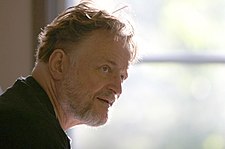
To elaborate a little more with some of my own amazing mathematical knowledge, what these guys Conway and Kochen have proven is that there is no function relating the initial parameters of an experiment to what the elementary particles in that experiment do.
In probability theory, however, there can and must be a function relating initial assumptions with future events. The idea of probability is that you can define a measure on events, given a set of outcomes. For instance, if I have a fair coin with sides heads and tails, the probability that I flip a head has a measure of one half.
The (Strong) Free Will Theorem shows that in an experiment involving elementary particles, there is simply no such function, allowing particles to do... what they want?
I can't help but contemplate the theological implications, as well as the questions. If the universe makes decisions, then... what are its reasons?
Human free will is the freedom to act based on reasons and not as the inevitable result of past events. So when I ask you how you chose what your career would be, you can say something like, "I've always had a passion for [insert pastime here]," or, "Because I wanted to make money," and not, "Because the sequence of physical events of the past 15 billion years have led inevitably up to this point in history, in which I would choose to be a [insert career here]."
Does the universe have any such reasons? Is there any reason why a particle should make one choice over another? These are basically theological questions, aren't they?
It seems appropriate in this instance to end my post with a question, rather than an answer. Have fun pondering. :)
Subscribe to:
Posts (Atom)