Showing posts with label judgment. Show all posts

Thursday, June 2, 2016

God's belated wrath

It's easy to read the Bible, especially the Old Testament, and feel overwhelmed by how angry God is. Long passages of Scripture dwell on all of the ways God will punish and destroy. For instance, Deuteronomy 28 spends 14 verses describing all the blessings the Israelites will receive if they obey the law; then it spends 54 more verses describing in increasing levels of horror all that God will do to punish them if they do not obey. And not all of it is hypothetical. Elsewhere we can read of plagues, venomous snakes, and the earth swallowing up Israelites because of their sins.

All of this, of course, becomes fodder for skeptics to throw at Christianity. It becomes a stumbling block for Christians like me. It's not easy to see how to reconcile "God is love" (1 John 4:16) with these passages of Scripture.

But let's back up to the beginning. In Genesis 3:3, Eve explains to the serpent that "God said, 'You shall not eat of the fruit of the tree that is in the middle of the garden, nor shall you touch it, or you shall die.'" Of course, Adam and Eve did eat the fruit, and they were banished from the Garden of Eden. Some say that this was a spiritual death. Christian tradition has often taught that human beings were created immortal, and that through this first sin they lost immortality. But what does the text say?
Then the Lord God said, 'See, the man has become like one of us, knowing good and evil; and now he might reach out his hand and take also from the tree of life, and eat, and live forever'--therefore the Lord God sent him forth from the garden of Eden, to till the ground from which he was taken. (Genesis 3:22-23)
The text does not at all indicate that humans were immortal. On the contrary, God wanted to prevent them from becoming immortal. So what happened to the threat, "Or you shall die"?

The very next story is far more telling. The second generation of human beings--Cain and Abel--manages to introduce murder to the world. So what does God do to Cain, who murders his brother? He doesn't kill him. On the contrary, God protects Cain: "Whoever kills Cain will suffer a sevenfold vengeance." (Genesis 4:15)

Ten generations go by, from Adam to Noah. Then God looks down and sees the wickedness of humankind. "And the Lord was sorry that he had made humankind on the earth, and it grieved him to his heart." (Genesis 6:6) So he decides to wipe out all the creatures with a huge flood--except, of course, sparing Noah.

In other words, God waits ten generations (the number ten may have some significance...) before finally unleashing justice on humankind. Even then, he can't go all the way through with it (he spares Noah and his family). Then, in a telling passage, he says,
I will never again curse the ground because of humankind, for the inclination of the human heart is evil from youth; nor will I ever again destroy every living creature as I have done. (Genesis 8:21, emphasis added)
Now, consider that not only does God promise never to wipe out humankind again, but he even takes away the one punishment he had given Cain, the first murderer. Why? Not because human beings are good, after all, but rather because they are evil! One can hear a tremendous sigh in this passage, like an incredible divine realization that humans are beyond hope.

It is interesting that God, after this covenant made with Noah, finally introduces the death penalty for murderers (Gensis 9:6). Then he blesses Noah and gives him the rainbow as a sign of his covenant never to flood the earth again. We think of a rainbow as pretty and colorful, but let's not forget what it is. It's a bow, that is to say a weapon, pointed toward the heavens. It is as if God is saying, "May the arrows of his bow strike me if I should ever think to flood the earth again."

And so Noah and his sons go out from the ark to repopulate the earth--a fresh beginning. So what happens? Noah gets drunk and is violated by his son, thus absolutely confirming what God says in Genesis 8:21.

Generations go by. Then human beings once again try to obtain immortality, not by eating from the Tree of Life but rather by constructing a tower to heaven. Just as in the Garden of Eden, God is wary of this outcome: "Look, they are one people, and they have all one language; and this is only the beginning of what they will do; nothing that they propose to do will now be impossible for them." (Genesis 11:6) Much as he shut out Adam and Even from the Garden of Eden, so he now shuts down the Tower of Babel by confusing the people's speech. Such is God's terrifying act of wrath...

After this story, ten more generations are listed, starting with Shem and finishing with Abraham. Just as Noah became the father of all nations, so now Abraham's very name means "ancestor of a multitude of nations" (Genesis 17:4). Abraham is God's new hope for a renewed humanity, just like Noah was.

So is it time for another judgment? It is. God hears a cry against Sodom, and he tells Abraham that he is going to send judgment on it. In a famous passage (Genesis 18:23-33), Abraham negotiates with God to see how many righteous people there would have to be left in Sodom in order for God to stay his wrath. God patiently listens while Abraham whittles the number slowly down from 50 to 10, after which the conversation ends in a chilling sense of foreboding--there aren't even 10 righteous people left in Sodom, are there? God has waited the maximum allowable time, until there is simply nothing left to do.

But I have skipped over something. God promises to Abraham the land of Canaan. He says,
Know this for certain, that your offspring shall be aliens in a land that is not theirs, and shall be slaves there, and they shall be oppressed for four hundred years; but I will bring judgment on the nation they they serve, and afterward they shall come out with great possessions. As for yourself, you shall go to your ancestors in peace; you shall be buried in a good old age. And they shall come back here in the fourth generation; for the iniquity of the Amorites is not yet complete. (Gensis 15:12-16)
What an odd plan! God very forthrightly admits that he is going to tolerate oppression and injustice for four hundred years until finally judging the oppressors. And as for the Amorites who occupy the land promised to Abraham, God freely admits they are already sinful, but he would rather wait before sending judgment on them. Four hundred years, no less!

All of this lays God open to the charge that in fact he is not quick enough to enact judgment. He is indeed "slow to anger" (Exodus 34:6) but when his anger finally arises, how terrible it is!

This theme of God's belated wrath is taken up once again in the New Testament, where Paul declares,
While God has overlooked the times of human ignorance, now he commands all people everywhere to repent, because he has fixed a day on which he will have the world judged in righteousness by a man whom he has appointed, and of this he has given assurance to all by raising him from the dead. (Acts 17:30-31)
And yet, here we are, two thousand years later...

All of this should give us a bit of a framework in which to read the rest of the Bible. Since it does talk so much about God's wrath and how imminent it is, we find it easy to be taken aback. But there are at least two points to consider. For one, perhaps when God says his wrath is imminent, it is really not so imminent, after all. This is why Peter has to urge his readers, saying, "The Lord is not slow about his promise, as some think of slowness, but is patient with you, not wanting any to perish, but all to come to repentance." (2 Peter 3:9) The prophets, who probably have the longest extended passages describing God's wrath, probably should not be taken too literally, and they should always be read keeping in mind that the goal is to urge the people to repentance.

Another point to keep in mind is that if God is harsh with Israel, it is because he doesn't want to make the same mistake (!) that he made with earlier generations. "Know then in your heart that as a parent disciplines a child so the Lord your God disciplines you." (Deuteronomy 8:5) I have often struggled with that verse. Surely sending fiery snakes and plagues is a little more harsh than the discipline one gives a child. But then, perhaps the literal meaning of these stories is not so important as the spiritual meaning, by which we understand all these acts of judment to be a cleansing of God's people. Or maybe we ought to believe that God can use death itself as a tool of discipline, saving our eternal souls by putting utterly to death our present bodies of flesh.

In any case, if we keep in mind the whole story that the Bible tells, we cannot possibly see God as some cantankerous deity waiting to throw thunderbolts on a whim. On the contrary, the psalms often complain that he is too slow to do so! God's patience almost seems blameworthy--why did he wait so long before finally judging the earth which was so full of wickedness, or before giving his people justice and saving them from slavery? Yet it is precisely this patience which gives us the chance to repent and find salvation. This tension is difficult to resolve.

And so often it is with the Bible, that ultimately we never find resolution, but we live spurred on by that tension. "Keep awake therefore, for you do not know on what day your Lord is coming." (Matthew 24:42) If we are led by faith in Jesus Christ, we must always live as if judgment is just around the corner, and yet we must continue to believe in God's infinite patience. That is just one of the many paradoxes, it seems to me, of the Christian faith.

Saturday, July 25, 2015

Then the Lord raised up judges

After a four year hiatus, I've decided to resume my series on the Bible on this blog. My other posts are here, here, here, here, here, here, here, here, and here. No explanation for giving up on this series could ever be honest--it's been four years now, and I simply don't remember why exactly I stopped. I do remember that the last post on Joshua made quite an impact on me. Genocide and the Bible: it seems like it would be a common question, but if you Google it there's a surprising dearth of resources on the topic for a religious perspective. Most answers you get will be from skeptics, which makes sense. The best little article I found from a Christian perspective was from Peter Enns, but it's quite brief and doesn't get too deep. Other Christian responses more or less waffle between, "I promise there's a perfectly reasonable explanation for all this," and, "Does the potter have no right over the clay?" These are hardly satisfying answers.

The reason I harp on this is because war is in no way a small theme in the Bible. In the Old Testament, "salvation" means, almost always, God rescuing his people in battle. To enter into the world of the Old Testament is to rejoin a warrior nation with constant danger on every side. If I'm honest with myself, I must admit two things. One, I have no idea from real experience what this is like. Two, I nevertheless sense deep down an atavistic longing awakened by these texts. I mention this because, before we sit in judgment over the text with our self-righteous modern ethical mindset, I think we should let ourselves be disarmed by the Bible. Before we ask, "How do we interpret the text and apply it to our lives?" maybe we should first just try to enjoy the stories. If you do this, you will absolutely love the book of Judges.

The theme of the book is laid out near the beginning, in 2:11-23, of which I'll quote 16-19:
Then the Lord raised up judges, who delivered them out of the power of those who plundered them. Yet they did not listen even to their judges; for they lusted after other gods and bowed down to them. They soon turned aside from the way in which their ancestors had walked, who had obeyed the commandments of the Lord; they did not follow their example. Whenever the Lord raised up judges for them, the Lord was with the judge, and he delivered them from the hand of their enemies all the days of the judge; for the Lord would be moved to pity by their groaning because of those who persecuted and oppressed them. But whenever the judge died, they would relapse and behave worse than their ancestors, following other gods, worshiping them and bowing down to them. They would not drop any of their practices or their stubborn ways.
There are basically two parts of the book after this. The first part, which runs through Chapter 16, is a series of tales recounting the deeds of the awesome judges. The Greeks had their pantheon of gods; the Israelites had their judges, each one of them known for showing glory in battle. You cannot find more entertaining stories, but let the reader be warned--there are blood and guts everywhere. The first of these stories is Ehud defeating King Eglon of Moab. "Now Eglon was a very fat man," says the sacred text. So do you know how Ehud killed him? He went before the king all alone to give him a "message from God," then he plunged a sword into his belly, "and the fat closed over the blade." This is in the Bible, folks.

Then there's the story of Deborah and Barak. Deborah the prophetess tells Barak to go to battle against Sisera, but Barak won't go without Deborah. So she tells him that because of this, "the Lord will sell Sisera into the hand of a woman." Now the woman she's talking about is actually Jael, who tricks Sisera into coming to rest in her tent after he flees from battle. Then while he's sleeping, she takes a tent peg and drives it into his skull.

Then there's the awesome story of Gideon, who defeats the Midianites. God commands him to narrow his army of 22,000 down to just 300 (why does that number sound familiar?), so that the Israelites will be convinced that the victory was truly miraculous. Gideon is one of my favorite characters because of something he says near the end of his story. From 8:22-23:
Then the Israelites said to Gideon, "Rule over us, you and your son and your grandson also; for you have delivered us out of the hand if Midian." Gideon said to them, "I will not rule over you, and my son will not rule over you; the Lord will rule over you."
This beautiful statement of Israelite allegiance to God over all human authorities is that tainted by what happens just after. Gideon creates an idol for the people, and they bow down and worship it. The Bible is full of this kind of stuff: there is never a clean victory, because even the good guys always screw up something.

After Gideon one of his seventy sons, Abimelech, tries to establish himself as king by first killing off all of his brothers. Only one of them, Jotham, survives. Jotham prophesies that the people's allegience to Abimelech will backfire, and that is what happens: Abimelech burns all the people of the Tower of Shechem, and in the very next scene Abimelech has a millstone thrown on his head and dies.

Then there's story of Jephthah, who delivers the people from the Ammonites. Jepthah makes the most twisted vow I've ever heard of: he promises that if God gives him victory, he'll kill the first thing that comes out of his house upon his return as a sacrifice. So guess what that is? His daughter--his only child. And guess what happens next? He actually kills her. Even worse, his daughter agrees with his decision; she only asks to be allowed to go to the mountains for two months to "bewail her virginity."

I actually heard a sermon about this passage once, for which I applaud the pastor. It was something about not acting on bad theology; Jephthah was basically the example of what not to do. For that I applaud this particular pastor.

By the way, Jephthah is where we get that word Shibboleth. The Ephraimites get angry at Jephthah because he went to battle without them, so they go to war with the Gileadites (Jephthah's people). If any of the Ephraimites tried to escape, here's what the Gileadites did (12:5-6):
Then the Gileadites took the fords of the Jordan against the Ephraimites. Whenever one of the fugitives of Ephraim said, "Let me go over," the men of Gilead would say to him, "Are you an Ephraimite?" When he said, "No," they said to him, "Then say Shibboleth," and he said, "Sibboleth," for he could not pronounce it right. Then they seized him and killed him at the fords of the Jordan.
Finally, the last great tale in this series is Samson. In terms of awesome heroes, it doesn't get much better than this: he kills a lion with his bare hands, he kills thirty men at once by himself in order to pay a debt, he kills a thousand Philistines with a donkey's jawbone. And last and best of all, he is seduced by Delilah, which turns out to be his undoing, because she gets him to tell her the secret of his strength. As 16:16 says, "Finally, after she had nagged him with her words day after day, and pestered him, he was tired to death." I'm telling you guys, the Bible can tell it like it is. The Philistines cut off his hair, which takes away his strength, so they capture him and throw him in prison. But do not fear, Samson's end is glorious. The Philistines make him perform in front of them in their temple. Then Samson asks God for one last bit of super-strength in order to crush the Philistines. His hair grows back just in time for him to push against the pillars of the temple, crushing all of the Philistines and himself.

The reason I list all of these stories is that they deserve the repetition. Simply trying to derive an abstract meaning from them would do them and the reader a disservice. This is not a morality play. I would never teach my children to try to be like Ehud or Gideon, certainly not Jephthah or Samson. These are heroes because of their strength, pure and simple.

Yet there is a clear message which comes through as all these stories are woven together. God will never stop saving his people. There are enemies all around, and God will show his strength by raising up a hero to stop them. But why? Why does God still love his people after they've betrayed him over, and over, and over again? That's love, folks. No matter how angry God is with Israel, he always welcomes them back.

There is a second part of this book, Chapters 17 - 21, which is just about the most horrifying thing you can find in all of literature. I read these chapters as one unit, framed by the repetition of the following verse, which is both 17:6 and 21:25, the very last verse of the book:
In those days there was no king in Israel; all the people did what was right in their own eyes.
It is a tale of idolatry, rape, murder, war, and lawlessness. There is a clear comparison made between the Benjaminites of Gibeah and the cities of Sodom and Gomorrah from Genesis. The whole story is not worth recounting here, and I'm not sure my stomach could take it if I tried.

The ending of Judges sends a mixed message. Is it now time for God to install a king in Israel? Perhaps that will turn them back from their wickedness. Yet all of this time, God himself has been their king; why do they need human protection? Later Samuel will tell the Israelites they have sinned in asking for a king, though God will give them one anyway. One way to read these words--"In those days there was no king in Israel"--is that the people had rejected even God as their king, and that is what they did "what was right in their own eyes."

If the first part was attractive because of its stories of strength and glory, the second part is nothing of the sort: it can only make one shudder. The Bible can be a very dark book.

But the thing is, I've always found Judges less disturbing than Joshua. It's no wonder that we see darkness when all the people do what is right in their own eyes. Somehow I can deal with that much more easily than I can with God himself commanding people to "show no mercy."

We'll just have to keep dealing with this as the Old Testament stories progress. War never stops being a central theme. Maybe by the time we get to Jesus there will be a way to make sense of it all.

Tuesday, June 21, 2011

Florensky on Eternal Punishment

I'm reading a second time through The Pillar and Ground of the Truth by Pavel Florensky. I usually don't reread books. This one just happens to have a certain draw for me, which may have something to do with the fact that Florensky is such an interesting yet completely unknown character.

Apparently it's all the rage these days to talk about hell. Rob Bell's book, Love Wins, provoked a lot of discussion among mainstream evangelicals, and has already produced a response book, Christ Alone. The Splintered Light Bookstore here in Charlottesville is now featuring on display no less than four books on the subject, including the two mentioned above, a book called Hell on Trial: the Case for Eternal Punishment, and (my personal favorite title), Hell Under Fire.
So what does Florensky have to say on the topic? In order to understand, one has to understand his underlying philosophy of doctrine. Religious doctrine is antinomic, meaning it contains contradictions within itself. Rather than being a sign of its weakness, this is precisely its strength: the thesis and antithesis strengthen one another, rather than diminishing or destroying each other.

With that in mind, here is an extended quote from TPGT, Letter Eight, which is entitled "Gehenna," summarizing Florensky's remarkable views on eternal punishment and carefully distinguishing them from other more prevalent views:

And so, we have described two series of progressively refined views. It is easy to remark that they hav eone and the same deficiency: they both rationalize the mystical process of punishment and purification, so that, according to the law of identity, sin is represented as either the very substance of the soul (the first series of views is of the "Protestantizing" variety) or as purely external in relation to the soul (the second series is of the "Catholicizing" variety). But neither view can be accepted. A man with evil will can in no wise be forced to change this will. But as long as he does not change it, he will not be reformed. Sin cannot be removed from a man without touching his inner essence (contrary to the second series). But, on the other hand, we cannot imagine a man who is absolutely and thoroughly corrupt, for this would mean that God's creation has not succeeded. The image of God cannot perish (contrary to the first series). Only one conclusion is possible from this, a conclusion which was drawn by us before, i.e. antinomy.

Thus, if you ask me, "Will there in fact be eternal torments?" I would answer "Yes." But if you were also to ask me, "Will there be universal restoration in bliss?" I would again say "Yes." The two are thesis and antithesis. I think that only the view expounded here satisfies both the spirit and the letter of the Holy Scripture as well as the spirit of patristic writing. But, being inwardly antinomic, this view requires faith and absolutely does not fit into the plane of rationality. It is both "yes" and "no." It is an antinomy. This indeed is the best proof of its religious validity.
Of course, I may be doing the reader a disservice, since by this point he should have already read through Florensky's lengthy discourse on the separation of the soul from the body, the separation of the self from the soul, and the utterly demonic nature of evil. It is only after one has plunged deep into the depths of his spiritual explorations that one can truly appreciate this man's rather simple, if intentionally contradictory, view of judgment. But alas, there is no time or space here to treat the entire letter.

Sunday, February 15, 2009

Judgment

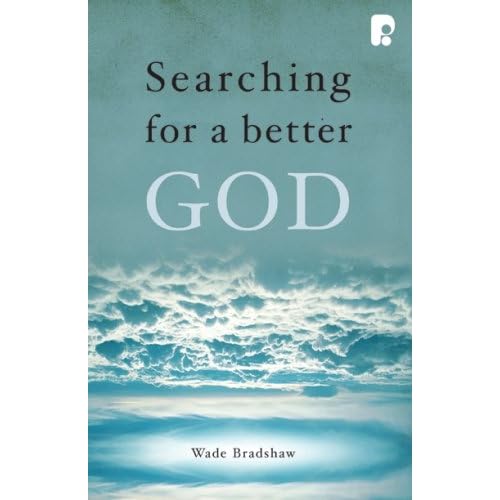
So I'm currently taking a Sunday school class at Trinity Presbyterian called "Searching for a Better God," which is taken from the title of a new book that one of our very own pastors, Wade Bradshaw, has written.

The basic idea of the book is that there are really two critical questions when it comes to God, one of which is sometimes assumed to be the only real question--namely, does He exist?

The other question has also been asked throughout history, but it has a huge impact on today's culture: is God good? This is the question Wade means to focus on.

I have a friend who was raised conservative Baptist, went to college, and became an atheist. Of course there were numerous reasons, but the first one (both logically and chronologically) was that he found he could no longer justify the malevolent behavior of God in the Bible.

Indeed, every thinking Christian has probably wondered about these things at some point. That's why I thought I'd check out this class.

I like the book so far, and I've made it almost all the way through. Wade has a sensitivity very akin to Francis Schaeffer (no surprise there--he spent 12 years at L'Abri in England).

My one complaint (and this would not be a complaint for some) is that his answers are too classic evangelical. I've heard them before, and they're not always so satisfying as they sound.

For instance, in addressing the question "Is God Angry?" he goes through another version, albeit a much more sensitive version, of the standard argument: yes, God is angry, but not in the way in which sinful people are angry (He does not let His emotions get the best of Him, He does not take out His wrath on people arbitrarily, etc.); and He is angry because something is wrong with the world, because He created it good and people went bad. His anger is impartial, directed entirely at what is evil. And we wouldn't want a God who just didn't care about evil.

Wade makes these points much more sensitively and eloquently than I have just summarized, and I think he does a good job. I just don't know if these answers are enough.

What is this judgment stuff all about? In searching for an answer, I've begun to contemplate a different conception of God than I'm used to. I think part of the reason judgment sounds so unbelievably horrible to us is because of the model we have of God.

Christianity has come to dominate Western culture, and people have used it to justify use and abuse of power for centuries. How might that affect our image of God? The prevailing metaphor for God in our culture is the omnipotent King, who could do anything if He wanted.

So then, why doesn't He? In particular, why doesn't He just teach us all to be good, and we can skip all that stuff about judgment? (And why does He allow suffering? These questions are all interconnected.)

But where did this judgment talk in the Bible come from? Somehow we are apt to forget that the ancient Israelites were never a very important people by the world's standards. In fact, my guess is that the lack of archeological evidence for the Exodus is probably not so much a sign that the Bible is false, as it is a testament to how relatively insignificant the people of Israel really were.

I'm definitely not badmouthing the Jews or anything. What I'm saying is that the prevailing metaphor must have been totally different: they were always the underdog. If God the omnipotent King is fighting on the side of the oppressed, then there might be justice in the world, after all.

When Jesus spoke of judgment, was he not speaking as an underdog? Indeed, an underdog beneath an underdog--a rebel against the Jewish establishment, who were themselves a small minority within the Roman Empire. How might this change your view of his words?

It does seem to me that judgment in the Bible is all about rescuing the underling from the oppressors. It struck me today that we as human beings are more powerful than we think, and if only we realize how much power we have to oppress, we would be more open to the concept that we are guilty before God.

Here's where I might just have to depart from the classical theology I've been taught all my life. I think that in a very real way, God is not in charge of the world. Scripture says He created humans to take care of the land, and it does seem He refuses to take that back from us. God has placed us in charge, and that's how it has been ever since.

Why is there suffering? Because God isn't in charge. Why do people sin? Because God isn't in charge. We are in charge, and we have made a mess of things. We are the oppressors of God's creation.

So what's all this talk about judgment? Doesn't that sound like tyranny? The Bible means for it to sound like a Cinderella story. A come-from-behind victory. God, the courageous rebel against the oppressors of His people, is going to liberate us from Egypt, and take us to the promised land. It's the story that inspired the civil rights movement--it's the story we all secretly (or not so secretly) want to be part of. And the Bible says, yeah, that's what life is all about.

God has to be in charge of the universe in some ultimate way, if He's God. But I think knowing God is often about choosing the best model for understanding Him. His omnipotence is certainly not so cut-and-dry as saying, "He can do anything." That kind of shallow reasoning leaves you open to the childish retort, "Can He make a rock so heavy He can't lift it?"

So what I'm saying is that the best model for understanding God's judgment is not the old model, where God looks down on His unholy creations from a distance and says, "Ew! How pathetic." Rather, the best model is one in which God comes to His people to dwell among them, so that He can free them from bondage. Judgment means overthrowing the oppressor.

Just some thoughts, I guess. Like my blog title says, whenever I have a thought, I just write it down for the whole world to see.

I just thought you'd like to know what I'm reading.