My firstborn son left the safety of his mother's womb on April 26. After the initial euphoria of the birth, there is a certain let down as one realizes, this baby barely knows how to feed, much less communicate. Other than his (sometimes violent) cries, I have no way of hearing from him, no way of knowing that he needs something.
That doesn't keep me from speaking to him, of course. I have heard that babies like their parents' voices. I've seen first hand that it can be soothing. More importantly, I take it as self-evident that without hearing his parents' voice, he will never learn our language.
Jesus said, "Truly I tell you, unless you change and become like children, you will never enter the kingdom of heaven." The immediate application is of course humility, but I think there is a deeper corollary (which is not at all detached from humility).
I have often wondered why, if God truly speaks, I do not hear him. But I do hear him, all the time. If God governs all creation, then every single thing that exists is available as a symbol of communication between God and humans. It is just that I don't yet speak his language.
Life is essentially growth, a process of constantly advancing toward maturity. Unless we humble ourselves and realize that it is a long process to learn the language of God, we will never hear him.
In the meantime, what, then, are our prayers? "We do not know how to pray as we ought, but the Spirit intercedes for us with sighs too deep for words." Our prayers are mere cries of anguish. We do not even understand what we need or what we are hungry for. "Your heavenly Father knows what you need even before you ask it." Thankfully, God is not a new father; he knows why we cry.
I realize all of this can sound very cruel, because life is very cruel. How can it be for our good that we watch the innocent die? How can it be for our good when we see oppression or are oppressed ourselves? We so often feel helpless, unable to get justice for ourselves or for others. It is as if "God is testing us to show that we are but animals." How, then, can we call God Father?
But there is no growth without suffering. Creation itself cannot exist without destruction. Existence is meaningless without non-existence.
When we hear the voice of God, we will not find that it says what our weak spirits want to hear. We wish that no harm would come to us. But what does he say to us instead? "Anyone who does not take up the cross and follow me is not worthy of me. Those who find their life will lose it, but those who lose their life for my sake will find it."
There are many people who seem to listen for the voice of God in order to find some serenity in the midst of a world full of anxiety. But God is a refuge for the time of battle, not a retreat away from this world.
How do we go so quickly from children to soldiers? "When I was a child, I thought like a child, I spoke like a child, I reasoned like a child; when I became an adult, I put an end to childish things. ... Now I know only in part; then I will know fully, even as I have been fully known." I don't think the point of becoming a child is to enter the kingdom of heaven and remain a child. It is to grow up into a citizen of that kingdom, and if there's one thing the Bible makes clear, it's that every citizen in this kingdom must be prepared for war. Not literal war--"for our struggle is not against enemies of blood and flesh"--but a war against "the cosmic powers of this present darkness, against the spiritual forces of evil in the heavenly places."
In this way the Christian life is a bit like a fairy tale, if I may say so. Chesterton was fond of fairy tales, and he thought they were much better education for children than any modern rationalism could ever be. I think probably he was right.
Showing posts with label the problem of evil. Show all posts
Showing posts with label the problem of evil. Show all posts
Sunday, May 22, 2016


Wednesday, May 11, 2016
Evil and nothingness
A good deal of Christian thought treats evil as having a lower ontological category than good. Everything God created is good, so evil can't possibly have any genuine existence. Here's St. Maximus the Confessor, for example:
I'm not sure I agree with that exactly, but I do think evil must be in a different ontological category than good. God created light, then separated it from the darkness. He did not create the darkness.
The existence of evil is an eternal puzzle, but one way to explain it is as a perversion of something, for which I cannot find the right word, which must necessarily exist. Perhaps I'll call it "non-existence" or nothingness. Existence needs non-existence. Light needs dark. But there are good and bad ways for this nothingness to exist.
If light existed without darkness, there would be only light and nothing else. But in that case there would really be nothing. A pure unitarian existence is no existence at all, because such an existence cannot differentiate between something and nothing.
Since everything which is both important and true about God must be stated as a paradox, I would not hesitate to say that God's existence is both absolutely necessary and dramatically contingent. The threat of God's non-existence is precisely the drama that unfolds in His trinitarian union. God the Father does not want to lose God the Son, and vice versa. Whatever else love is, it means desiring the continued existence of the other, and if that is to mean anything real, there must be a genuine threat to that existence.
Indeed, that genuine threat is played out in the drama of creation and, ultimately, in the cross of Jesus Christ. God actually died. To say otherwise would be to deny the greatest mystery of the Christian faith, And a tremendous corollary: the Father actually lost the Son. In this drama, God's love is proved more real than it ever could have been otherwise. The threat of nothingness was so real that it was actually fulfilled.
This drama is played out in all of creation. Why, I asked earlier, would God risk creating a world which is capable of producing evil? Because such is the only kind of world that can genuinely exist. And in our world the threat is so real that we see its fulfillment on a daily basis. We see nothingness win over existence. We see chaos triumph over order. We see creatures separate themselves from their Creator.
The difference between us and God is that we do not use nothingness in support of existence, death in support of life. Our pain becomes suffering because we experience it in isolation. Because we make our existence entirely our own, any threat to that existence becomes a threat to our entire universe. That is what evil is.
But God does not let nothingness turn into evil. As the psalmist writes, Even darkness is not dark to you, the night is as bright as the day. When God died, when God lost God, He raised Him up from the dead. In dying He defeated death; in not existing He showed that He truly exists. As Jesus said, Those who find their life will lose it, but those who lose their life for my sake will find it.
Which means we always have the chance to become like God. Instead of wanting to be free from the drama of existence, we ought to embrace it. Life is risky; everyone knows that. The source of eternal life is not the elimination of all risk, but rather than paradoxical joining of the absolute assurance and the total uncertainty of our future existence--and not just our own, but that of everything else, as well.
I don't think this "lets God off the hook," so to speak, for terrible things that happen. He could have intervened, so why didn't He? If we love God, this question will come up again and again. To stop asking it would be to deny the essential drama of life, which is that paradoxical union of God's presence and absence.
So it is not about coming to God's defense, but rather finding the way forward which concerns me most. If we have lost, let us mourn that loss. If we have gained, let us rejoice in that gain. Either way, let us always desire life all the more. Not a monotonous, stable existence which is equivalent to nothingness, but rather a dramatic, risky existence which never ceases to puzzle the imagination.
"[I]ndeed, mere fantasy deceives the mind and, through passion, causes vain attachment to objects that do not exist, but provides no foundation in reality." (Ad Thalassium 64)That's from a translation by Paul Blowers in the collection, On the Cosmic Mystery of Jesus Christ from the Popular Patristics Series. There's also a footnote that says, "Cf Gregory of Nyssa's famous dictum that man 'invented' evil."
I'm not sure I agree with that exactly, but I do think evil must be in a different ontological category than good. God created light, then separated it from the darkness. He did not create the darkness.
The existence of evil is an eternal puzzle, but one way to explain it is as a perversion of something, for which I cannot find the right word, which must necessarily exist. Perhaps I'll call it "non-existence" or nothingness. Existence needs non-existence. Light needs dark. But there are good and bad ways for this nothingness to exist.
If light existed without darkness, there would be only light and nothing else. But in that case there would really be nothing. A pure unitarian existence is no existence at all, because such an existence cannot differentiate between something and nothing.
Since everything which is both important and true about God must be stated as a paradox, I would not hesitate to say that God's existence is both absolutely necessary and dramatically contingent. The threat of God's non-existence is precisely the drama that unfolds in His trinitarian union. God the Father does not want to lose God the Son, and vice versa. Whatever else love is, it means desiring the continued existence of the other, and if that is to mean anything real, there must be a genuine threat to that existence.
Indeed, that genuine threat is played out in the drama of creation and, ultimately, in the cross of Jesus Christ. God actually died. To say otherwise would be to deny the greatest mystery of the Christian faith, And a tremendous corollary: the Father actually lost the Son. In this drama, God's love is proved more real than it ever could have been otherwise. The threat of nothingness was so real that it was actually fulfilled.
This drama is played out in all of creation. Why, I asked earlier, would God risk creating a world which is capable of producing evil? Because such is the only kind of world that can genuinely exist. And in our world the threat is so real that we see its fulfillment on a daily basis. We see nothingness win over existence. We see chaos triumph over order. We see creatures separate themselves from their Creator.
The difference between us and God is that we do not use nothingness in support of existence, death in support of life. Our pain becomes suffering because we experience it in isolation. Because we make our existence entirely our own, any threat to that existence becomes a threat to our entire universe. That is what evil is.
But God does not let nothingness turn into evil. As the psalmist writes, Even darkness is not dark to you, the night is as bright as the day. When God died, when God lost God, He raised Him up from the dead. In dying He defeated death; in not existing He showed that He truly exists. As Jesus said, Those who find their life will lose it, but those who lose their life for my sake will find it.
Which means we always have the chance to become like God. Instead of wanting to be free from the drama of existence, we ought to embrace it. Life is risky; everyone knows that. The source of eternal life is not the elimination of all risk, but rather than paradoxical joining of the absolute assurance and the total uncertainty of our future existence--and not just our own, but that of everything else, as well.
I don't think this "lets God off the hook," so to speak, for terrible things that happen. He could have intervened, so why didn't He? If we love God, this question will come up again and again. To stop asking it would be to deny the essential drama of life, which is that paradoxical union of God's presence and absence.
So it is not about coming to God's defense, but rather finding the way forward which concerns me most. If we have lost, let us mourn that loss. If we have gained, let us rejoice in that gain. Either way, let us always desire life all the more. Not a monotonous, stable existence which is equivalent to nothingness, but rather a dramatic, risky existence which never ceases to puzzle the imagination.
Friday, May 8, 2015
Miracles and the problem of evil
Judging from the questions people ask scientists who are also Christians, I take it that popular opinion holds that modern science and belief in miracles are fundamentally incompatible. I don't know why this is exactly, but I'm sure it's all David Hume's fault.
The argument seems to go something like this. Science is based on the understanding that all of nature exhibits certain regularities, called laws, and that by examining its parts through repeatable experiments, we can learn more about it. If miracles exist, then this regularity doesn't hold. Yet we know that science keeps telling us more and more about the way the universe really is. So miracles don't exist.
But that doesn't follow. If science is based on studying things which are repeatable, then science will tell you about those aspects of the universe which tend to repeat themselves. One will find it extremely difficult to prove that the whole universe follows (and always has followed) certain laws without any irregularity. If you say that we have not found any such irregularity yet, you are begging the question. First of all, a lot of people disagree with you, based on the amount of testimony that exists claiming miracles have occurred. Secondly, your sample size is vanishingly small--especially if modern science is in fact correct about the size and age of the universe. The only way you could possibly extrapolate from such a small sample size is to assume what you want to prove.
On the other hand, I confess that despite my religious affections (or perhaps because of them, as I'll explain shortly), I am attracted to the idea of a globally regular universe--that is, a universe without miracles. This would appear to put me in quite a predicament, and I'm not always sure how to overcome it.
My reason for being attracted to this idea is entirely aesthetic. The most incomprehensible thing about the universe, Einstein said, is that it is comprehensible. That is, the most incomprehensibly beautiful thing. You start with a very short list of axioms, you derive a mathematical theory, and then you watch in awe as physical objects actually seem to obey this theory, as if the Creator of the universe were some sort of divine mathematician. And you realize that whatever inherent limitations this puts on you and your life--for instance, I suppose it means death for us humans is probably inevitable--it is simply pure joy to see that at the heart of all reality is supreme rationality, such that only through the slow and painstaking efforts of the greatest minds can human beings start to glimpse the underlying principles. If we have a purpose in this world, it is to be the products of such a divinely rational order.
Aside from sheer awe, however, there is a big payoff to living in a world guided by universal, comprehensible laws. Through science, we can master the world, creating technologies which push back against death and disease, increase our comfort, and allow us to live more fulfilling lives. If this is starting to sound like some sort of modern secular religion, is that at all surprising? Haven't we, thanks to the scientific revolution, in fact stumbled onto something quite extraordinary? All religions have features both attractive and repulsive, and this new scientific religion is no different. It may not promise eternity or redemption, but it promises both awe of the transcendent and practical means by which we can live meaningful lives. That is hardly something to scoff at.
Now if miracles are real, then this glorious vision is tainted, if not shattered. Not only does it ruin the idea of perfectly uniform mathematical laws governing the universe, but it even makes us wonder why we put so much effort into understanding the universe when there is a much easier way. If God can simply cure diseases and raise the dead by the uttering a word, why doesn't he? Why do we slave away trying to understand laws which are not really laws at all, when all the while God could step in and just fix everything whenever he likes? It seems both sacrilegeous and immoral. Only a divine bully with no respect for transcendent beauty could possibly intervene at such irregular intervals, while hiding in the dark the rest of the time.
Thus the problem of miracles reduces to the problem of evil: how is God's existence compatible with the presence of suffering, death, and disasters in this world? These latter are most certainly consistent with the laws of the universe--laws cannot be broken, even if it would suit our purposes to do so. But a personal God, capable of intervening--how can he allow it?
The other side is not without objection. There is, for instance, the problem of good: how can we make the concept of goodness intelligible in a world governed entirely by impersonal, unyielding laws? We can push back against suffering and death, yes, but to what end? Short life and disease do not threaten modern people nearly as much as boredom, depression, and even suicide. Try as we might to create our own meaning, anything we invent without any reference to a transcendent source eventually appears, well, meaningless.
I am inclined to think that neither of these problems can really be "solved." So I find my reflections on this matter humbling, both as a mathematician and as a Christian. On the one hand, as much as many of us would love to claim science as the banner of objective truth, the reality is that the vision driving us is every bit as religious as Christianity or any other major world religion, with just as many weaknesses. On the other hand, as a Christian I need to consider this modern, secular religion to be a real contender for my heart and soul. When Einstein spoke of a "cosmic religious feeling," he wasn't kidding.
Whether one of these religions will ultimately succeed in shaping our civilization in the future surely depends in part on how we answer serious philosophical questions like that of miracles. But I believe the more important factor is the human heart, which, once it receives and adopts a certain of vision of the world, will follow it far and wide, for reasons far beyond the intellect's comprehension. For the Christian's heart, of course there are miracles. And for the modernist's, of course there are not. And for those of us somewhere in between, I suppose there is the hope that one day we'll know for sure.
The argument seems to go something like this. Science is based on the understanding that all of nature exhibits certain regularities, called laws, and that by examining its parts through repeatable experiments, we can learn more about it. If miracles exist, then this regularity doesn't hold. Yet we know that science keeps telling us more and more about the way the universe really is. So miracles don't exist.
But that doesn't follow. If science is based on studying things which are repeatable, then science will tell you about those aspects of the universe which tend to repeat themselves. One will find it extremely difficult to prove that the whole universe follows (and always has followed) certain laws without any irregularity. If you say that we have not found any such irregularity yet, you are begging the question. First of all, a lot of people disagree with you, based on the amount of testimony that exists claiming miracles have occurred. Secondly, your sample size is vanishingly small--especially if modern science is in fact correct about the size and age of the universe. The only way you could possibly extrapolate from such a small sample size is to assume what you want to prove.
On the other hand, I confess that despite my religious affections (or perhaps because of them, as I'll explain shortly), I am attracted to the idea of a globally regular universe--that is, a universe without miracles. This would appear to put me in quite a predicament, and I'm not always sure how to overcome it.
My reason for being attracted to this idea is entirely aesthetic. The most incomprehensible thing about the universe, Einstein said, is that it is comprehensible. That is, the most incomprehensibly beautiful thing. You start with a very short list of axioms, you derive a mathematical theory, and then you watch in awe as physical objects actually seem to obey this theory, as if the Creator of the universe were some sort of divine mathematician. And you realize that whatever inherent limitations this puts on you and your life--for instance, I suppose it means death for us humans is probably inevitable--it is simply pure joy to see that at the heart of all reality is supreme rationality, such that only through the slow and painstaking efforts of the greatest minds can human beings start to glimpse the underlying principles. If we have a purpose in this world, it is to be the products of such a divinely rational order.
Aside from sheer awe, however, there is a big payoff to living in a world guided by universal, comprehensible laws. Through science, we can master the world, creating technologies which push back against death and disease, increase our comfort, and allow us to live more fulfilling lives. If this is starting to sound like some sort of modern secular religion, is that at all surprising? Haven't we, thanks to the scientific revolution, in fact stumbled onto something quite extraordinary? All religions have features both attractive and repulsive, and this new scientific religion is no different. It may not promise eternity or redemption, but it promises both awe of the transcendent and practical means by which we can live meaningful lives. That is hardly something to scoff at.
Now if miracles are real, then this glorious vision is tainted, if not shattered. Not only does it ruin the idea of perfectly uniform mathematical laws governing the universe, but it even makes us wonder why we put so much effort into understanding the universe when there is a much easier way. If God can simply cure diseases and raise the dead by the uttering a word, why doesn't he? Why do we slave away trying to understand laws which are not really laws at all, when all the while God could step in and just fix everything whenever he likes? It seems both sacrilegeous and immoral. Only a divine bully with no respect for transcendent beauty could possibly intervene at such irregular intervals, while hiding in the dark the rest of the time.
Thus the problem of miracles reduces to the problem of evil: how is God's existence compatible with the presence of suffering, death, and disasters in this world? These latter are most certainly consistent with the laws of the universe--laws cannot be broken, even if it would suit our purposes to do so. But a personal God, capable of intervening--how can he allow it?
The other side is not without objection. There is, for instance, the problem of good: how can we make the concept of goodness intelligible in a world governed entirely by impersonal, unyielding laws? We can push back against suffering and death, yes, but to what end? Short life and disease do not threaten modern people nearly as much as boredom, depression, and even suicide. Try as we might to create our own meaning, anything we invent without any reference to a transcendent source eventually appears, well, meaningless.
I am inclined to think that neither of these problems can really be "solved." So I find my reflections on this matter humbling, both as a mathematician and as a Christian. On the one hand, as much as many of us would love to claim science as the banner of objective truth, the reality is that the vision driving us is every bit as religious as Christianity or any other major world religion, with just as many weaknesses. On the other hand, as a Christian I need to consider this modern, secular religion to be a real contender for my heart and soul. When Einstein spoke of a "cosmic religious feeling," he wasn't kidding.
Whether one of these religions will ultimately succeed in shaping our civilization in the future surely depends in part on how we answer serious philosophical questions like that of miracles. But I believe the more important factor is the human heart, which, once it receives and adopts a certain of vision of the world, will follow it far and wide, for reasons far beyond the intellect's comprehension. For the Christian's heart, of course there are miracles. And for the modernist's, of course there are not. And for those of us somewhere in between, I suppose there is the hope that one day we'll know for sure.
Wednesday, March 10, 2010
Evolution, Ethics, and Theodicy
Michael Le Page at CultureLab wrote a review of a book entitled Inside the Human Genome: A case for non-intelligent design by John C. Avise. The title of the review expresses succinctly what I find to be the most profound link between the debate over evolution and the debate over religion.
The title Le Page chose was, "A caring god would not have designed us like this."
Essentially what modern atheists do is restate the problem of evil in terms of evolutionary science. Look at how much DNA is wasted, they say. Look at what a mess it all is if you really look at it. Look at how much better it could have been if it really had been designed.
Thus the fascination that scientists have toward the human body and its incredible complexity is tempered by a sober realism about the horrible things that can occur naturally, all because our biology is so screwed up.
As N. T. Wright wisely points out, the problem of evil cuts both ways. For the religious, the problem is, "If God is good and God is in control, how can bad things happen?" For the atheist, the problem is, "In light of the immense evil that surrounds us, is all of the good that we experience just a big cosmic joke? Is there any meaning to it at all, or is it essentially random?"
Any self-aware scientist has to feel the tension. We study the world around us because it truly is so fascinating, so beautiful, in all of its complexity. But yet that very complexity leads to many things that cause incredible misery. Should we love or hate the world we live in?
Christians are far from working out this question. Although scripture insists that the world was good, even very good when God created it, the current state of the world difficult to measure from a Christian perspective. Is the universe in all of its complexity still essentially good, or has it experienced fundamental corruption?
And different denominations of Christianity profoundly disagree on their doctrine of the end times, which has significant implications for how we view the universe now. Is God going to completely obliterate all created matter and bring in something totally new, or are we going to see some continuity between the old and the new? Should we spend time caring about this world, or should we be so other-worldly that we think only of the next?
This question, which I maintain is equally unclear for both atheist and Christian, really comes to bear when considering ethical questions we face today. For Le Page, it comes down to this:
I'm not unwilling to sympathize with Le Page on this point. For him, the problem of evil can be solved by endeavoring to fix it ourselves. I think it would take a certain hardness of heart, from a Christian perspective, to completely shut him down on this point.
Yet I do think it's worth reflecting on where our power to do good is coming from. If all of the universe has been formed out of the oblivion by totally impersonal forces, what makes us think that we have actually accomplished anything by attempting to alleviate human suffering? Will not all of our attempts to solve the problem of evil be swallowed up by death and decay?
If, on the other hand, we believe the testimony of ancient Christians, who claimed that the Messiah was truly raised from the dead, and that God's new creation has begun, there is something to hope for in fighting against the problem of evil. There is power in every attempt to alleviate human suffering, because we have hope that the power of God really is for us, not ultimately against us.
Now if we do rely on such power, then in fact it would be wise to use caution when approaching ethical problems. The urge to just "do something" when faced with problems of suffering in the world has to be tempered by wisdom. That is where religion derives its moral authority in society; it preserves the memory that the best intentions often pave the road to hell.
But if we say that ultimately our hearts our set on the next world and not this one, then I don't really know what we do about the problem of evil. We can hope to escape it, but we can never hope to really solve it. I can see how a scientist would have a real problem with this.
Ultimately I think the way we, both Christians and atheists, need to approach the question of theodicy is by asking the question, "Should we love or should we hate the world around us?" I think this will put us all on more common ground as we consider important ethical questions facing our world.
It's easy for atheists to think, "There just can't be a loving all-powerful God out there because there is evil," and it's easy for Christians to think, "I know why God allows evil, and atheists are just so hard-hearted that they won't accept it."
But if we consider together the more complicated question (all of us admitting that it is complicated) that I have just put forward, we will realize that we have a lot of different values to weigh against each other. One value is of our curiosity about this beautiful and fascinating universe; another is our desire not to see people suffer.
How we measure those values against one another will make an enormous difference for our future. The problem of evil is not some philosopher's game; it is a real, practical matter for all people.
The title Le Page chose was, "A caring god would not have designed us like this."
Essentially what modern atheists do is restate the problem of evil in terms of evolutionary science. Look at how much DNA is wasted, they say. Look at what a mess it all is if you really look at it. Look at how much better it could have been if it really had been designed.
Thus the fascination that scientists have toward the human body and its incredible complexity is tempered by a sober realism about the horrible things that can occur naturally, all because our biology is so screwed up.
As N. T. Wright wisely points out, the problem of evil cuts both ways. For the religious, the problem is, "If God is good and God is in control, how can bad things happen?" For the atheist, the problem is, "In light of the immense evil that surrounds us, is all of the good that we experience just a big cosmic joke? Is there any meaning to it at all, or is it essentially random?"
Any self-aware scientist has to feel the tension. We study the world around us because it truly is so fascinating, so beautiful, in all of its complexity. But yet that very complexity leads to many things that cause incredible misery. Should we love or hate the world we live in?
Christians are far from working out this question. Although scripture insists that the world was good, even very good when God created it, the current state of the world difficult to measure from a Christian perspective. Is the universe in all of its complexity still essentially good, or has it experienced fundamental corruption?
And different denominations of Christianity profoundly disagree on their doctrine of the end times, which has significant implications for how we view the universe now. Is God going to completely obliterate all created matter and bring in something totally new, or are we going to see some continuity between the old and the new? Should we spend time caring about this world, or should we be so other-worldly that we think only of the next?
This question, which I maintain is equally unclear for both atheist and Christian, really comes to bear when considering ethical questions we face today. For Le Page, it comes down to this:
Why do we still allow children to be born with hideous diseases that could be prevented? Why do we rightly glorify efforts to cure diseases such as cancer and Alzheimer's, but still regard tackling the root cause - our dismal, degenerating DNA - as taboo?
Our ethics have been so hideously distorted by superstitious nonsense that we cannot see the clear moral imperative: we need to start sorting out the mess of a genome evolution has left us as soon as we can.
I'm not unwilling to sympathize with Le Page on this point. For him, the problem of evil can be solved by endeavoring to fix it ourselves. I think it would take a certain hardness of heart, from a Christian perspective, to completely shut him down on this point.
Yet I do think it's worth reflecting on where our power to do good is coming from. If all of the universe has been formed out of the oblivion by totally impersonal forces, what makes us think that we have actually accomplished anything by attempting to alleviate human suffering? Will not all of our attempts to solve the problem of evil be swallowed up by death and decay?
If, on the other hand, we believe the testimony of ancient Christians, who claimed that the Messiah was truly raised from the dead, and that God's new creation has begun, there is something to hope for in fighting against the problem of evil. There is power in every attempt to alleviate human suffering, because we have hope that the power of God really is for us, not ultimately against us.
Now if we do rely on such power, then in fact it would be wise to use caution when approaching ethical problems. The urge to just "do something" when faced with problems of suffering in the world has to be tempered by wisdom. That is where religion derives its moral authority in society; it preserves the memory that the best intentions often pave the road to hell.
But if we say that ultimately our hearts our set on the next world and not this one, then I don't really know what we do about the problem of evil. We can hope to escape it, but we can never hope to really solve it. I can see how a scientist would have a real problem with this.
Ultimately I think the way we, both Christians and atheists, need to approach the question of theodicy is by asking the question, "Should we love or should we hate the world around us?" I think this will put us all on more common ground as we consider important ethical questions facing our world.
It's easy for atheists to think, "There just can't be a loving all-powerful God out there because there is evil," and it's easy for Christians to think, "I know why God allows evil, and atheists are just so hard-hearted that they won't accept it."
But if we consider together the more complicated question (all of us admitting that it is complicated) that I have just put forward, we will realize that we have a lot of different values to weigh against each other. One value is of our curiosity about this beautiful and fascinating universe; another is our desire not to see people suffer.
How we measure those values against one another will make an enormous difference for our future. The problem of evil is not some philosopher's game; it is a real, practical matter for all people.
Thursday, April 2, 2009
The Problem of Logic
 So, yeah, I have been incredibly busy lately and not in the mood for blogging.
But, in keeping with the theme of this blog, as expressed in the title, I thought I'd write something that I've been thinking about lately.
It's the famous "problem of evil." It's a simple argument designed to prove God doesn't exist. Many people have famously left Christianity (and probably other religions) because this argument finally got to them. (A notable example would be Bart Ehrman, who recently wrote a book about the problem of evil.)
The argument is simple: if God is good, all-power, and all-knowing, then there should simply be no evil--he would be motivated by goodness and enabled by his power and knowledge to keep it out of existence. But there is clearly evil, so God doesn't exist.
Much debate has occurred throughout the ages over this question, with theists giving reasons why evil exists and atheists and others explaining why those reasons aren't good enough.
Not everyone takes that line of argument. See, for example, this debate between Bart Ehrman and N. T. Wright. Wright takes the position that you can't and shouldn't try to "solve" the problem of evil.
Let me explain why I more or less agree with this. Christian thought starts with God. God is the source of all goodness, beauty, and reason. Since these three have the same source, they are inseparable. That is, whatever is truly good is also beautiful and reasonable; whatever is truly beautiful is also good and, in some sense, reasonable; and whatever is truly reasonable is good and, in some sense, beautiful.
I can see why some people would not agree with this assumption. After all, isn't part of the beauty of humor that it is absurd, as opposed to reasonable? And can't a person be logical without being good? And can't something be good without necessarily being beautiful?
I won't go into all the details, but I think such examples fall short of true counterexamples. I think Christian thought begins with the idea that these things converge, since they all come from the Creator God, who makes chaos into order, creates beauty out of nothing, and calls it good. I think the humanity within us recognizes there must be some connection. If being reasonable isn't ultimately good, why be reasonable? If being good isn't ultimately beautiful, why be good? And if beauty isn't ultimately reasonable or good, then why should we find it beautiful after all?
With this foundation, we ask, "Where does evil come from?" and we realize that there cannot be an answer. If there were, then the answer would explain how it is reasonable for evil to exist. But if it were truly reasonable for evil to exist, then it would also be good for evil to exist. This cannot be the case.
Does this disprov
 e the premise, that beauty, goodness, and reason have their source in one God? Actually, no, it does not. For one thing, the math nerd in me points out that there are plenty of such things as incompleteness theorems (for which Kurt Gödel, pictured on the left, is most famous) that show things like how you can't have a logical system in which every question has an answer. So just because the question, "Why does evil exist?" doesn't have an answer, it doesn't follow that we have taken the wrong approach to thinking.
(Super-math-nerdyness alert: I might bring up as an example that modern set theory leads to the inevitable conclusion that the continuum hypothesis can neither be proved nor disproved. But we don't throw out the basic axioms of set theory; it's still basically the right way of looking at most mathematical problems. We just have to acknowledge our limitations.)
More importantly, what are the alternatives? As I understand it, certain other philosophies simply drive a wedge between reason, beauty, and goodness--either one from the other two, or all three from each other. That's why you get in existentialism, for instance, this idea of the "hero of the absurd," who goes beyond reason toward that which is truly good. This can sound glorious, but in the end it is a tragedy--a world where goodness does not make sense and where reason is not good is not a world that invites human flourishing. We may as well throw up our hands and stop trying.
Do we need to accept the alternatives? What would be the consequences of accepting a manner of thinking in which reason, beauty, and goodness all converged--and one in which the question, "Why does evil exist?" has no answer?
First, we wouldn't accept answers as reasonable unless they were also good and beautiful--this would lead to less stern pragmatism and more creative thought about problems our society faces. Conversely, we wouldn't accept ideas as good and beautiful unless they also had a ring of reasonableness in them--this would curb our tendency toward hopeless romanticism. Such thinking could lead to true human flourishing.
And instead of answering the question, "Why does evil exist?" with reasons, we would answer it with actions. I mean, the obvious answer to the question is, and always has been, "Well, it shouldn't!" Stoic acceptance of evil seems wise at first, but I think it is an unnecessarily grim philosophy. What we need instead is a view of evil as real, powerful, and wrong--wrong because it is bad, wrong because it is ugly, and wrong because it is irrational. With this triple opposition to evil, how much more would we be able to actually combat it with our actions?
There's no room in one blog post to iron out all the details, but I'm glad just to be breaking this dry spell I've been having. This is a perpetually interesting topic to me, and I'm sure I'll change my thinking on it as I learn more.
Sunday, February 15, 2009
Judgment
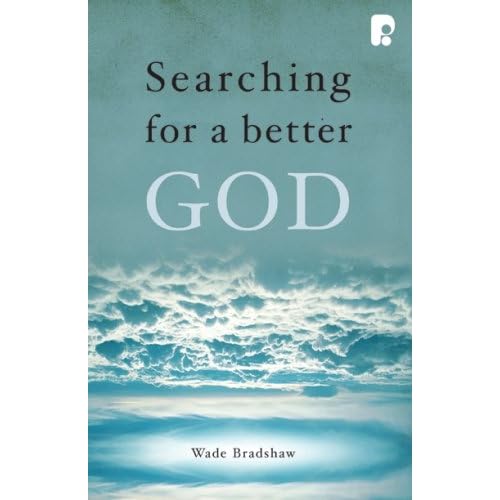 So I'm currently taking a Sunday school class at Trinity Presbyterian called "Searching for a Better God," which is taken from the title of a new book that one of our very own pastors, Wade Bradshaw, has written.
The basic idea of the book is that there are really two critical questions when it comes to God, one of which is sometimes assumed to be the only real question--namely, does He exist?
The other question has also been asked throughout history, but it has a huge impact on today's culture: is God good? This is the question Wade means to focus on.
I have a friend who was raised conservative Baptist, went to college, and became an atheist. Of course there were numerous reasons, but the first one (both logically and chronologically) was that he found he could no longer justify the malevolent behavior of God in the Bible.
Indeed, every thinking Christian has probably wondered about these things at some point. That's why I thought I'd check out this class.
I like the book so far, and I've made it almost all the way through. Wade has a sensitivity very akin to Francis Schaeffer (no surprise there--he spent 12 years at L'Abri in England).
My one complaint (and this would not be a complaint for some) is that his answers are too classic evangelical. I've heard them before, and they're not always so satisfying as they sound.
For instance, in addressing the question "Is God Angry?" he goes through another version, albeit a much more sensitive version, of the standard argument: yes, God is angry, but not in the way in which sinful people are angry (He does not let His emotions get the best of Him, He does not take out His wrath on people arbitrarily, etc.); and He is angry because something is wrong with the world, because He created it good and people went bad. His anger is impartial, directed entirely at what is evil. And we wouldn't want a God who just didn't care about evil.
Wade makes these points much more sensitively and eloquently than I have just summarized, and I think he does a good job. I just don't know if these answers are enough.
What is this judgment stuff all about? In searching for an answer, I've begun to contemplate a different conception of God than I'm used to. I think part of the reason judgment sounds so unbelievably horrible to us is because of the model we have of God.
Christianity has come to dominate Western culture, and people have used it to justify use and abuse of power for centuries. How might that affect our image of God? The prevailing metaphor for God in our culture is the omnipotent King, who could do anything if He wanted.
So then, why doesn't He? In particular, why doesn't He just teach us all to be good, and we can skip all that stuff about judgment? (And why does He allow suffering? These questions are all interconnected.)
But where did this judgment talk in the Bible come from? Somehow we are apt to forget that the ancient Israelites were never a very important people by the world's standards. In fact, my guess is that the lack of archeological evidence for the Exodus is probably not so much a sign that the Bible is false, as it is a testament to how relatively insignificant the people of Israel really were.
I'm definitely not badmouthing the Jews or anything. What I'm saying is that the prevailing metaphor must have been totally different: they were always the underdog. If God the omnipotent King is fighting on the side of the oppressed, then there might be justice in the world, after all.
When Jesus spoke of judgment, was he not speaking as an underdog? Indeed, an underdog beneath an underdog--a rebel against the Jewish establishment, who were themselves a small minority within the Roman Empire. How might this change your view of his words?
It does seem to me that judgment in the Bible is all about rescuing the underling from the oppressors. It struck me today that we as human beings are more powerful than we think, and if only we realize how much power we have to oppress, we would be more open to the concept that we are guilty before God.
Here's where I might just have to depart from the classical theology I've been taught all my life. I think that in a very real way, God is not in charge of the world. Scripture says He created humans to take care of the land, and it does seem He refuses to take that back from us. God has placed us in charge, and that's how it has been ever since.
Why is there suffering? Because God isn't in charge. Why do people sin? Because God isn't in charge. We are in charge, and we have made a mess of things. We are the oppressors of God's creation.
So what's all this talk about judgment? Doesn't that sound like tyranny? The Bible means for it to sound like a Cinderella story. A come-from-behind victory. God, the courageous rebel against the oppressors of His people, is going to liberate us from Egypt, and take us to the promised land. It's the story that inspired the civil rights movement--it's the story we all secretly (or not so secretly) want to be part of. And the Bible says, yeah, that's what life is all about.
God has to be in charge of the universe in some ultimate way, if He's God. But I think knowing God is often about choosing the best model for understanding Him. His omnipotence is certainly not so cut-and-dry as saying, "He can do anything." That kind of shallow reasoning leaves you open to the childish retort, "Can He make a rock so heavy He can't lift it?"
So what I'm saying is that the best model for understanding God's judgment is not the old model, where God looks down on His unholy creations from a distance and says, "Ew! How pathetic." Rather, the best model is one in which God comes to His people to dwell among them, so that He can free them from bondage. Judgment means overthrowing the oppressor.
Just some thoughts, I guess. Like my blog title says, whenever I have a thought, I just write it down for the whole world to see.
I just thought you'd like to know what I'm reading.
Thursday, December 4, 2008
The Problem of Suffering
I've been thinking a lot lately about justice. One of the biggest (and most logically cogent) complaints people have about Christianity is that it has tremendous difficulty explaining evil and suffering in this world. Atheism offers a chillingly logical explanation: there is suffering because the universe does not care whether or not we suffer, and we happen not to be invincible in the universe as it exists. So, do the best you can, and try to appreciate all that is good in life. In the end, there's not going to be any cosmic justice. The universe does not care that you're here now, and it won't care when you leave. So forget about the big picture and focus on living a good life now.
There are no apparent logical contradictions here, except that it makes the whole pursuit of justice an absurdity. I think this idea is well-developed in lots of authors from C. S. Lewis to present day apologists like Timothy Keller. Oh, and speaking of Keller, I'm reading his book, The Reason for God, which also happens to be why I'm writing this post right now. It's a nice read, and I would recommend it to anyone with an interest in answers to hard questions about Christianity.
Keller develops the point about why the pursuit of justice is absurd in an atheistic universe in the ninth chapter of his book, entitled, "The Knowledge of God." He makes the case that each of us already knows there is a God, and we think and act on that knowledge every time we make an assertion like, "This is wrong."
I've heard this kind of thing before, and it's the kind of thing that gets people on both sides of religious debates going in circles. Atheists will be floored by the idea that you have to have some big God telling you what to do in order to have a sense of right and wrong. And then Christians will wonder why atheists can't see how if it's all up to us, then really right and wrong are just relative and therefore meaningless. It's so simple, each side thinks, wondering how the other side could allow themselves to be trapped in such a web of nonsense.
Fortunately, Keller has been talking with people who have genuinely well-thought doubts about Christianity long enough to know better. That's why for all of his typical evangelical arguments he also makes some appeal to what I think is the more potent side of Christian thought.
Here's what he writes in his second chapter, on suffering:
Having recently read N. T. Wright's Surprised by Hope, I am lately rediscovering the incredible power of the truly orthodox Christian belief in the resurrection of the dead. It is not a belief that gives hope to the mere individual. The resurrection of the dead will bring with it healing and restoration to the cosmos, a perfection of all creation.
It seems to me that once you brush aside all the meaningless semantics, the fundamental difference between Christianity and other worldviews is the view of what the world is going to become, and how it is going to become that way. Atheism especially predicts no happy ending for humans, no real goal toward which we as a race are moving. But Christianity predicts a future made for human beings to flourish--yet not just humans, but all creation. This gives objectivity to the concept of justice. We know certain things are right and certain things are wrong because we know that one day, things will be like this, and not like that.
We will live forever; we will not die. It is bad when people die, and it is wrong when people kill each other. We will lack nothing, and we will be perfectly content. It is bad when people don't have enough, and it is wrong when people steal from one another. There is a whole logic to justice founded on the objective reality that we anticipate as Christians. All justice can be seen as a glimpse of the future we long for, the future we know will come with the resurrection of the dead.
How will this be accomplished? Through suffering, Christianity says. Not just our suffering, but even the suffering of God, who suffered on the cross. And not only that, but even the suffering of the whole creation--see Romans 8:19-23.
We have the what, the how, but there still is this elusive, "why?" Why should we suffer? Why does God allow us to suffer? Why does God subject his creation to suffering? Even if He's justified in doing so, why? Even if the fact that He suffered for us justifies the fact that He allows our suffering, well, why did He suffer? Could He not have chosen some other path?
I think that Christians must all admit that in some sense, this "why" will always be elusive. Just read the book of Job; in the end, God didn't really see the need to answer Job's question, nor did Job persist in demanding one. Yet I've always found this question fruitful. It always causes me to remember amazing things. I always remember how the greatest memories of my life are those which involved the most hardships. I remember how every time I've found something worth pursuring, there always seemed to be a degree of pain involved. I remember how often conquering pain can be a far greater pleasure than any pleasure that comes in the absence of pain.
Most of all, I remember that Jesus is the great conquerer. He does not merely deflect pain and suffering. He absorbs it, takes it into himself, and destroys it. That is a true conqueror.
With that kind of conquering spirit, who knows what the body of Christ could do today? Save the world, maybe? At the very least, we could give a glimpse of what we know must one day come. The sooner the better, I say.
There are no apparent logical contradictions here, except that it makes the whole pursuit of justice an absurdity. I think this idea is well-developed in lots of authors from C. S. Lewis to present day apologists like Timothy Keller. Oh, and speaking of Keller, I'm reading his book, The Reason for God, which also happens to be why I'm writing this post right now. It's a nice read, and I would recommend it to anyone with an interest in answers to hard questions about Christianity.
Keller develops the point about why the pursuit of justice is absurd in an atheistic universe in the ninth chapter of his book, entitled, "The Knowledge of God." He makes the case that each of us already knows there is a God, and we think and act on that knowledge every time we make an assertion like, "This is wrong."
I've heard this kind of thing before, and it's the kind of thing that gets people on both sides of religious debates going in circles. Atheists will be floored by the idea that you have to have some big God telling you what to do in order to have a sense of right and wrong. And then Christians will wonder why atheists can't see how if it's all up to us, then really right and wrong are just relative and therefore meaningless. It's so simple, each side thinks, wondering how the other side could allow themselves to be trapped in such a web of nonsense.
Fortunately, Keller has been talking with people who have genuinely well-thought doubts about Christianity long enough to know better. That's why for all of his typical evangelical arguments he also makes some appeal to what I think is the more potent side of Christian thought.
Here's what he writes in his second chapter, on suffering:
The Biblical view of things is resurrection--not a future that is just a consolation for the life we never had but a restoration of the life you always wanted. This means that every horrible thing that ever happened will not only be undone and repaired by will in some way make the eventual glory and joy even greater.
Having recently read N. T. Wright's Surprised by Hope, I am lately rediscovering the incredible power of the truly orthodox Christian belief in the resurrection of the dead. It is not a belief that gives hope to the mere individual. The resurrection of the dead will bring with it healing and restoration to the cosmos, a perfection of all creation.
It seems to me that once you brush aside all the meaningless semantics, the fundamental difference between Christianity and other worldviews is the view of what the world is going to become, and how it is going to become that way. Atheism especially predicts no happy ending for humans, no real goal toward which we as a race are moving. But Christianity predicts a future made for human beings to flourish--yet not just humans, but all creation. This gives objectivity to the concept of justice. We know certain things are right and certain things are wrong because we know that one day, things will be like this, and not like that.
We will live forever; we will not die. It is bad when people die, and it is wrong when people kill each other. We will lack nothing, and we will be perfectly content. It is bad when people don't have enough, and it is wrong when people steal from one another. There is a whole logic to justice founded on the objective reality that we anticipate as Christians. All justice can be seen as a glimpse of the future we long for, the future we know will come with the resurrection of the dead.
How will this be accomplished? Through suffering, Christianity says. Not just our suffering, but even the suffering of God, who suffered on the cross. And not only that, but even the suffering of the whole creation--see Romans 8:19-23.
We have the what, the how, but there still is this elusive, "why?" Why should we suffer? Why does God allow us to suffer? Why does God subject his creation to suffering? Even if He's justified in doing so, why? Even if the fact that He suffered for us justifies the fact that He allows our suffering, well, why did He suffer? Could He not have chosen some other path?
I think that Christians must all admit that in some sense, this "why" will always be elusive. Just read the book of Job; in the end, God didn't really see the need to answer Job's question, nor did Job persist in demanding one. Yet I've always found this question fruitful. It always causes me to remember amazing things. I always remember how the greatest memories of my life are those which involved the most hardships. I remember how every time I've found something worth pursuring, there always seemed to be a degree of pain involved. I remember how often conquering pain can be a far greater pleasure than any pleasure that comes in the absence of pain.
Most of all, I remember that Jesus is the great conquerer. He does not merely deflect pain and suffering. He absorbs it, takes it into himself, and destroys it. That is a true conqueror.
With that kind of conquering spirit, who knows what the body of Christ could do today? Save the world, maybe? At the very least, we could give a glimpse of what we know must one day come. The sooner the better, I say.
Subscribe to:
Posts (Atom)