This morning in Sunday School at Trinity Presbyterian, we were talking about how God speaks today. One way, the teacher said, quoting A. W. Tozer, was in the silence. Away from the distractions of the world, alone with your own thoughts, allowing the persistent presence of God to permeate your mind, there is much to discover about life.
It's funny how often life is about going back and forth. These days there is so much information for us to consume. A quick Google search and you can find out almost any little thing you want to know. There is great advantage in that. The world is meant to be explored, and at no time in history has that been easier than now.
But sometimes all the noise drowns out that persistent presence known as Yahweh. I remember one time being taught to breathe the name of God. Indeed, the name Yahweh flows in and out very easily, and sounds like a whisper, piercing through the storms of noise around us.
I've noticed that for some reason American Christians tend to prefer the practical to the mystical, and if the mystical is desired it is most often in the context of loud storms of emotion. I like discovering elements of the mystical in my own faith.
It is a serene, cool, crisp winter day here in Charlottesville. Perfect for... watching the Super Bowl, no doubt. And getting work done for tomorrow. And for surfing the Internet, and talking to friends and family on the phone...
But if I can just stop for a second, I notice that it's really quiet in my room right now. The world looks very still through my window. It's late afternoon, and the sun is shining at a low angle on my desk, highlighting the edges of a beautiful framed quote that an old friend gave me.
And I can hear my own breathing.
God, the world is so beautiful.
I feel like a stranger. I don't come to the silence often enough. Just like I don't get back to my old home town enough, that small town with nothing to do but see old friends. I guess that's why I fumble so much on the question "Where are you from?" I've never made my roots strong enough anywhere to have a reasonable answer.
Just the same, I wonder if I know who I am, since I find it so hard to describe the silence of being alone.
Maybe the one who does know will tell me.
Sunday, February 1, 2009


Monday, January 26, 2009
Do Our Values Come from God?
 The title of my post is the title of Victor Stenger's seventh chapter in his book God: The Failed Hypothesis. I have been slow to finish blogging about this book, and I think I'll call it quits with this topic.
There is one other topic of interest in the book, and that is on the lack of achaeological evidence for the claims made in the Bible (chapter 6). I have very little expertise in this area, but I will say that I'm not as inclined as some to read the Bible as I would a modern history book. However, on the historicity of the Resurrection of Jesus Christ, I have found N. T. Wright to be especially helpful.
Now to the topic at hand. Stenger wants to argue that morals do not come from religion:
The data... indicate that the majority of human beings from all cultures and all religions or no religion agree on a common set of moral standards. While specific differences can be found, universal norms do seem to exist. ...
The Judeo-Christian and Islamic scriptures contain many passages that teach noble ideals that the human race has done well to adopt as norms of behavior.... But without exception, the fact that these principles developed in earlier cultures and history indicates that they were adopted by--rather than learned from--religion. ...
Believers are guided by their consciences in deciding for themselves what is right and wrong, just as are nonbelievers. ... Psychological tests indicate that there are no significant differences in the moral sense between atheists and theists. ...
It seems likely that this is were we umans have learned our sense of right and wrong. We have taught it to ourselves. (pp. 195, 197, 208, 209)
Stenger's argument is growing more and more typical in the secular age. The problem is, he utterly fails to answer the appropriate question.
The question is not, "Where did we learn morals?" but rather, "What is the logical basis for having morals?" What is morality, anyway? Morality is in part a preference for one set of circumstances over another; we call one thing "good" and another "bad." The other part of morality is becoming trained to seek the good and reject the bad.
 Theists like me argue that without God there is no logical basis for the first part of morality, i.e. there is no reason to prefer one circumstance over another. Think about a coin flip. The difference between heads and tails is totally meaningless until someone assigns some meaning. If you just keep flipping a coin and writing down "heads" or "tails," you aren't doing anything. But if you toss a coin to start the Super Bowl, now that's a big deal.
If everything is just coin flips, even the decisions humans make, then nothing is really a big deal. We're just kidding ourselves. Manmade morality is just an arbitrary preference. Some people like chocolate, others don't. Previous generations thought slavery was okay, we don't. It's just a coin toss.
Now if there is a God, then there is a logical reason to believe that some outcomes in life are good, while others are bad. There is a mandate from the very nature of reality to seek the good, which is part of what I perceive Jesus to be saying when he announces the coming of his kingdom. Because God exists, we can claim it is logical to be moral. It is not a matter of mere preference. We are not kidding ourselves.
Of course, Stenger wants to focus entirely on the empirical question, rather than dealing with the metaphysics. So he takes all kinds of cheap shots at Christians and a few at Muslims to ensure his reader knows how bad religion is, and how good atheists are.
According to statistics from the Federal Bureau of Prisons, Christians make up almost 80 percent of the prison population. Atheists make up about 0.2 percent. ...
Published studies do indicate that a child's risk of sexual abuse by a family member increases as the family's religious denomination becomes more conservative, that is, when the teachings of scriptures and other doctrines are taken more literally. Similarly, the probability of wife abuse increases with the rigidity of a church's teachings pertaining to gender roles and hierarchy. ...
The Old Testament is filled with atrocities committed in the name of God. ...
The history of Christendom abounds with violence sanctioned by the Church...
Of coure, the Muslim terrorists themselves felt they were obeying God's command to engage in jihad.The Qur'an is as bloodthirsty as the Old Testament. ... (pp. 194,
203-205)
Indeed, I think these are cheap shots, mostly because Stenger leaves a gaping hole in his empirical argument, failing to make a single reference to the atrocities committed by atheists such as Stalin in the 20th century, or the Darwinist principles motivating the Nazi holocaust.
Empirical questions about morality and religion are legitimate. Stenger is leaving out some useful insights. Here are two articles he should read:
First, the New York Times reports that those who are both sincere in their fa ith and devout in their religious practice have been shown to have better self-control. The study was done by a secular psychologist.
 ith and devout in their religious practice have been shown to have better self-control. The study was done by a secular psychologist.
Second, Matthew Parris writing for the Times Online has opined that despite his atheist views, he believes that Christianity is making Africa a better place:
Now a confirmed atheist, I've become convinced of the enormous contribution that Christian evangelism makes in Africa: sharply distinct from the work of secular NGOs, government projects and international aid efforts. These alone will not do. Education and training alone will not do. In Africa Christianity changes people's hearts. It brings a spiritual transformation. The rebirth is real. The change is good.
But in any case, the empirical question is not enough. We as humans need to know why we should do what we do. Atheists imply that morality is nothing more than getting along with people. The problem is, survival only depends on getting along with people in power. True morality is always based on something deeper.
As Jesus said, "You know that the rulers of the Gentiles lord it over them, and their great ones are tyrants over them. It will not be so among you; but whoever wishes to be great among you must be your servant, and whoever wishes to b first among you must be your slave; just as the Son of Man came not to be served but to serve, and to give his life as a ransom for many." (Mt 20:25-28, NRSV)
This violates the survival principles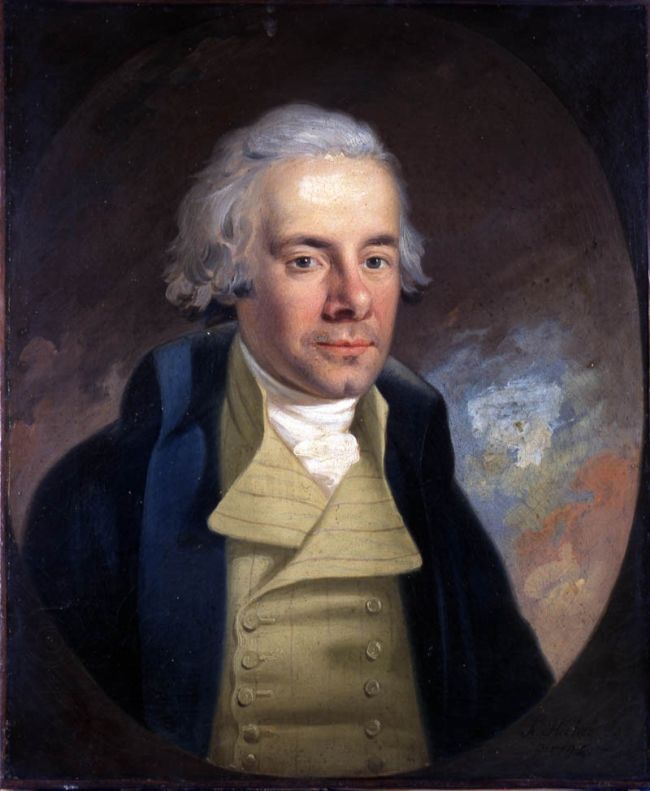 upon which Darwinist ethics are based, and yet Christians throughout the ages have found it compelling. Look at the ones who have truly done great things, from William Wilberforce to Martin Luther King, Jr. to Mother Teresa. Does that kind of virtue come from the idea that nice behavior will prolong the survival of the species? No; it comes from a much deeper since that there is a promised land, that there is a kingdom worth fighting for with the weapons of love and self-sacrifice.
upon which Darwinist ethics are based, and yet Christians throughout the ages have found it compelling. Look at the ones who have truly done great things, from William Wilberforce to Martin Luther King, Jr. to Mother Teresa. Does that kind of virtue come from the idea that nice behavior will prolong the survival of the species? No; it comes from a much deeper since that there is a promised land, that there is a kingdom worth fighting for with the weapons of love and self-sacrifice.To this day I have simply never found any coherent atheist argument why morality makes any sense. I guess it has a little bit to do with my personality. I tend not to care about "fitting in." I care more about principles. The people I respect and admire are the ones who give up everything for the sake of an ideal greater than themselves. Atheist ethics don't sound to me like any more than trying your best to get along.
Even if atheists are on average "nicer" than most religious people, that doesn't impress me at all. Just because you're nice doesn't mean you've convinced me that being nice is logical. More importantly, sometimes nice people just go through life never making a real difference in this world. Indeed, real moral advances are usually made by stepping on some toes.
So while Stenger's book has offered a bold scientific argument against God, he ultimately fails to explain what I know to be true. There is a compelling vision of how things should be that we can all sense. It is not made up; it is there, in reality. We know, deep down, the kingdom of God is coming, and it motivates us to act as becomes a citizen of that kingdom.
I recommend Stenger's book to everyone, because if you haven't dealt with the arguments he gives, now is the time. I don't think he succeeds in his goal, which is to disprove God's existence, but he does force us to take different views on some issues than we may be used to. But there's certainly nothing wrong with that.
Knowledge

So my frat brother Zaq Lawal (Phi Beta Sigma, Beta Beta Nu chapter) made this picture for me on Obamicon.me, a web site that allows you to look like an Obama poster.
What do you think? Is this change we can believe in? :)
Saturday, January 24, 2009
Just a shout-out to my bros
I'm just really proud of my fraternity (Phi Beta Sigma) brothers at Washington & Lee University for the service that they do, and for posting pictures on the Internet. Here are some pictures of them playing basketball at Natural Bridge juvenile detention center in Natural Bridge, VA.


Keep up the good work, Beta Beta Nu.
Friday, January 23, 2009
On Being Young, Male, Protestant, and Pro-life
So yesterday I attended the March for Life in Washington, D.C. in order to protest Roe v Wade, the 1973 Supreme Court decision that made abortion on demand legal in the United States. I thought I'd write a few reflections I had on the pro-life movement.
This was my fourth year in a row marching for life. This year was much different from the last three. For one thing, the weather was way better--clear and sunny. For another, our new president is decidedly opposed to our cause, a complete turnaround from George Bush. It was a little sad this year not getting a nice address from the president.
If you haven't already heard, Obama has overturned the Mexico City Policy, which means our tax dollars will go to organizations around the world that promote abortion. Once again, Obama proves that he is not pro-"choice," but pro-abortion, since he thinks we who believe abortion is murder still ought to share our money with organizations that promote it.
But for now let me not dwell on how sickening Obama's position on this issue is. There are some fascinating sociological realities to confront whenever I engage in pro-life work as a young, Protestant male.
A vague sort of pro-choice argument is that old men shouldn't be deciding what a woman can do with her own body. I think this argument really stems from the fact that politics has for the most part always been dominated by older men. It really looks bad, in our cultural climate, for old guys to appear to be restricting young women's freedom.
However, the reality of the pro-life movement is that it's dominated by women, especially in younger age groups. Whenever I go to the Students for Life of America conference, it's attended by at least 75% women. The last time I went to a UVA "Hoos" for Life meeting, I was one of two men; there were eight women. When I graduated from Washington & Lee, I left W&L Students for Life with all female officers. I know this is all anecdotal evidence, but I doubt there's any sociologist out there interested enough in the pro-life movement to provide any rigorous study. But take it from me and anyone else in the pro-life movement: women are taking charge.
The trouble is, most guys I know really don't want to be caught telling women what to do, so they just ignore the issue. They see abortion as a women's issue that they can't get involved in. I do remember in high school hearing the phrase, "No ovaries, no opinion." So most guys just learn to keep quiet, even if they're pro-choice, but especially if they're pro-life.
If a man is pro-life, often he simply leaves it at voting pro-life, which is fine as far as it goes; but advocacy is what we need now more than ever. Really, seeing abortion as just a women's issue plays right into the hands of pro-choicers, who have always tried to frame the debate in terms of women's rights. In fact, abortion is a human rights issue, and as far as I know women and men are equally human (if feminism really is nothing more than this "radical notion," then I'm a feminist).
As awkward as it is for me to be a young man advocating a pro-life position, I feel really privileged to be in this position. First of all, that the movement is so full of young women is hardly a downside (*wink*). More importantly, I think it is critical for young men to make a show of standing alonside young women in defense of unborn children, making our cynical culture realize that men actually can think about something more than themselves.
I often wonder about men on the other side. Once I was standing in front of a Planned Parenthood alongside two female students from Washington & Lee (one was my girlfriend, incidentally). They held up signs saying, "Abortion Hurts Women." When you do this kind of thing, you usually get hecklers, but particularly poignant to me was seeing a young man, probably not much older than I am, drive by and stick up his middle finger.
What message did that man hope to send? Was he advocating for women's rights by making an ugly gesture at two twenty year-old women peacefully protesting abortion? What right did he have to be angry that these young women said abortion hurts?
Men should be pro-life, and pro-woman. We don't need men to think abortion is okay. We need men to take responsbility for our sexual choices, be good husbands, and be good fathers. We men can be part of the solution to the problems that keep abortion in demand. I'll try to do my part.
If women dominate the pro-life movement, Catholics almost consume it completely. I don't think that there are necessarily more pro-life Catholics than Protestants in this country. I just think Catholics are more organized. They have built up all the infrastructure of the movement, from the March for Life to American Life League to Students for Life of America.
One time at the Students for Life conference, there was a speaker from Stand to Reason, talking about apologetics. This speaker was a Presbyterian, and he asked if there were any other Presbyterians in the audience. I believe that out of a crowd of around 700 or so, I was one of two Presbyterians. The number of Catholics was easily over 90%.
To be honest, this lack of activism is the one thing I loathe about my denomination. Mainline Presbyterians tend to be liberal, so they don't even take a pro-life stance. My denomination, the PCA, is pro-life; yet it doesn't actively foster a sense that activism is a good thing. I think many evangelicals, no matter how they vote, are ultimately teaching themselves that the Lord loves potluck dinners more than protests, prayer and fasting more than advocacy.
How refreshing it is to run into the Catholic view of politics, a view which sees activism as a real service to the kingdom of God. And it's not as if Catholics are neglecting other forms of piety--at least not the kind of Catholics you meet at the March for Life.
Still, it is a little weird to be on a bus full of Catholics when they're praying the rosary. Gotta love those moments of Protestant awkwardness. I guess politics alone can't make me a Catholic.
Nor should it; there are plenty of non-religious people who still see reason on this issue. I felt sorry for the one guy at the March for Life holding up a sign that said, "Agnostics Against Abortion." Given that all the speeches at the march were full of religious rhetoric, this guy must've felt even more alone than us Protestants.
But the truth is, none of the marchers care what your religion is when you're marching. For that moment, we're all united against one single injustice--and it's not hard to understand. Your faith may be your primary motivation to be an activist, but believing abortion is wrong takes nothing more than a respect for all human lives, even the smallest ones!
Some day I honestly hope the pro-life movement can outgrow its fiery religious rhetoric, if only for the sake of being taken more seriously. The pro-life position really is a common-sense position, based not so much on scripture as on science. In fact, at our country's founding people believed life began at "quickening," that is, when you could feel the baby kick. Abortion wasn't outlawed in the U.S. until the 1800's, thanks largely to the American Medical Association. Anti-abortion legislation was actually a triumph of scientific progress, not Catholic theology. (You might want to read this and this.)
Still, a solid belief in God's justice has always motivated people to stand up for what is right. I do hope and pray that one day I will see and end to this battle. Not that we can ever completely stop battling against injustice, until the Messiah returns, but victories are won, and change really can happen.
Change. Hmmm. Where have I heard that before?
This was my fourth year in a row marching for life. This year was much different from the last three. For one thing, the weather was way better--clear and sunny. For another, our new president is decidedly opposed to our cause, a complete turnaround from George Bush. It was a little sad this year not getting a nice address from the president.
If you haven't already heard, Obama has overturned the Mexico City Policy, which means our tax dollars will go to organizations around the world that promote abortion. Once again, Obama proves that he is not pro-"choice," but pro-abortion, since he thinks we who believe abortion is murder still ought to share our money with organizations that promote it.
But for now let me not dwell on how sickening Obama's position on this issue is. There are some fascinating sociological realities to confront whenever I engage in pro-life work as a young, Protestant male.
A vague sort of pro-choice argument is that old men shouldn't be deciding what a woman can do with her own body. I think this argument really stems from the fact that politics has for the most part always been dominated by older men. It really looks bad, in our cultural climate, for old guys to appear to be restricting young women's freedom.
However, the reality of the pro-life movement is that it's dominated by women, especially in younger age groups. Whenever I go to the Students for Life of America conference, it's attended by at least 75% women. The last time I went to a UVA "Hoos" for Life meeting, I was one of two men; there were eight women. When I graduated from Washington & Lee, I left W&L Students for Life with all female officers. I know this is all anecdotal evidence, but I doubt there's any sociologist out there interested enough in the pro-life movement to provide any rigorous study. But take it from me and anyone else in the pro-life movement: women are taking charge.
The trouble is, most guys I know really don't want to be caught telling women what to do, so they just ignore the issue. They see abortion as a women's issue that they can't get involved in. I do remember in high school hearing the phrase, "No ovaries, no opinion." So most guys just learn to keep quiet, even if they're pro-choice, but especially if they're pro-life.
If a man is pro-life, often he simply leaves it at voting pro-life, which is fine as far as it goes; but advocacy is what we need now more than ever. Really, seeing abortion as just a women's issue plays right into the hands of pro-choicers, who have always tried to frame the debate in terms of women's rights. In fact, abortion is a human rights issue, and as far as I know women and men are equally human (if feminism really is nothing more than this "radical notion," then I'm a feminist).
As awkward as it is for me to be a young man advocating a pro-life position, I feel really privileged to be in this position. First of all, that the movement is so full of young women is hardly a downside (*wink*). More importantly, I think it is critical for young men to make a show of standing alonside young women in defense of unborn children, making our cynical culture realize that men actually can think about something more than themselves.
I often wonder about men on the other side. Once I was standing in front of a Planned Parenthood alongside two female students from Washington & Lee (one was my girlfriend, incidentally). They held up signs saying, "Abortion Hurts Women." When you do this kind of thing, you usually get hecklers, but particularly poignant to me was seeing a young man, probably not much older than I am, drive by and stick up his middle finger.
What message did that man hope to send? Was he advocating for women's rights by making an ugly gesture at two twenty year-old women peacefully protesting abortion? What right did he have to be angry that these young women said abortion hurts?
Men should be pro-life, and pro-woman. We don't need men to think abortion is okay. We need men to take responsbility for our sexual choices, be good husbands, and be good fathers. We men can be part of the solution to the problems that keep abortion in demand. I'll try to do my part.
If women dominate the pro-life movement, Catholics almost consume it completely. I don't think that there are necessarily more pro-life Catholics than Protestants in this country. I just think Catholics are more organized. They have built up all the infrastructure of the movement, from the March for Life to American Life League to Students for Life of America.
One time at the Students for Life conference, there was a speaker from Stand to Reason, talking about apologetics. This speaker was a Presbyterian, and he asked if there were any other Presbyterians in the audience. I believe that out of a crowd of around 700 or so, I was one of two Presbyterians. The number of Catholics was easily over 90%.
To be honest, this lack of activism is the one thing I loathe about my denomination. Mainline Presbyterians tend to be liberal, so they don't even take a pro-life stance. My denomination, the PCA, is pro-life; yet it doesn't actively foster a sense that activism is a good thing. I think many evangelicals, no matter how they vote, are ultimately teaching themselves that the Lord loves potluck dinners more than protests, prayer and fasting more than advocacy.
How refreshing it is to run into the Catholic view of politics, a view which sees activism as a real service to the kingdom of God. And it's not as if Catholics are neglecting other forms of piety--at least not the kind of Catholics you meet at the March for Life.
Still, it is a little weird to be on a bus full of Catholics when they're praying the rosary. Gotta love those moments of Protestant awkwardness. I guess politics alone can't make me a Catholic.
Nor should it; there are plenty of non-religious people who still see reason on this issue. I felt sorry for the one guy at the March for Life holding up a sign that said, "Agnostics Against Abortion." Given that all the speeches at the march were full of religious rhetoric, this guy must've felt even more alone than us Protestants.
But the truth is, none of the marchers care what your religion is when you're marching. For that moment, we're all united against one single injustice--and it's not hard to understand. Your faith may be your primary motivation to be an activist, but believing abortion is wrong takes nothing more than a respect for all human lives, even the smallest ones!
Some day I honestly hope the pro-life movement can outgrow its fiery religious rhetoric, if only for the sake of being taken more seriously. The pro-life position really is a common-sense position, based not so much on scripture as on science. In fact, at our country's founding people believed life began at "quickening," that is, when you could feel the baby kick. Abortion wasn't outlawed in the U.S. until the 1800's, thanks largely to the American Medical Association. Anti-abortion legislation was actually a triumph of scientific progress, not Catholic theology. (You might want to read this and this.)
Still, a solid belief in God's justice has always motivated people to stand up for what is right. I do hope and pray that one day I will see and end to this battle. Not that we can ever completely stop battling against injustice, until the Messiah returns, but victories are won, and change really can happen.
Change. Hmmm. Where have I heard that before?
Tuesday, January 20, 2009
Inspiration
So today Barack Obama became the 44th President of the United States of America. He is the media's darling, an inspiraton to us all. My school, the University of Virginia, even suspended classes between 11 and 2 so that people could watch the event.
It's a funny feeling, hearing all this commotion about a president I didn't vote for, especially when the commotion is all about how finally after all this time we have a black president. I voted against him because I didn't agree with his ideas, but come to find out, it was the image that mattered more.
No doubt about it, Obama does inspire me. As a story, Obama is amazing. We all need a story to live by, and Obama's story is one that will add to America's already rich narrative about itself.
But the weird thing is, I can't say along with the many rabid fans out there, "Yes, we did!" I'm not on the right side of this great American tale. I'm one of the naysayers, one of those who opposed "Change," because I thought it just might be a bad idea.
The only kind of "change" I opposed was with a capital "C." I didn't vote against Obama on the basis of race, or image, or story. I voted against him on principle. Mostly I think he has completely sold himself to the wrong side of the biggest human rights issue in American politics: abortion.
So where does that put me in the story of America? Wouldn't it be nice if we could simplify everything into good and evil? Wouldn't it be nice if we could just tell a story about how the people who really believed America was a land of opportunity finally achieved that vision in electing Barack Obama, no matter what their backward opponents said? That's the story I'm sure many would like to tell.
I'm 23 years old. I have no memory of segregated schools, or Jim Crow laws, or the March on Washington.
I am, however, acutely aware that I am young enough to have been legally aborted. The pictures of aborted fetuses are vividly etched in my memory forever. The stories of women who regret their abortions, the stories women who feel they have no other options, the stories of men who regret not doing anything about it--these are the stories that move me here and now.
On Thursday I will go to Washington, D.C., not for Obama's inauguration, but for the 36th annual March for Life. That means the 36th anniversary of Roe v Wade. That means 36 years of a legalized practice that very well could've killed me long before I had a voice to oppose it.
There are many stories in America's history. This is the story I want to be a part of--a story of faithful opposition to a practice that devalues human life. It is the modern day abolition movement.
In one thread in America's great story, Obama is at the pinnacle of our success. The first black president represents the victory of Martin Luther King's dream; he embodies the hopes and dreams of millions of Americans.
But in another thread, Obama is just another example of the status quo that has given us no relief from the destruction of human lives. Much as he and others try to spin abortion into a victory for the women's rights movement, the truth, as Feminists for Life can attest, is that abortion does women no good in the grand scheme of things. Hiding our problems behind closed doors is not progress; "choice" is not liberating when it devalues human life.
I want so badly to like Barack Obama. I like the way he talks. I like the way he carries himself. I like the American values he often espouses.
But as long as Obama remains on the wrong side of this critical issue, I will not waver in my opposition to him. Not that I will oppose him in every way; just on the issues that matter most.
Perhaps the day will come when our story--the story of those who remained steadfast in the defense of human life--will be as inspirational as Obama's is today. Yet standing up for what is right is its own reward, whether or not the media throws a party for us.
Today one great American narrative has reached a climax. Mine is just beginning.
It's a funny feeling, hearing all this commotion about a president I didn't vote for, especially when the commotion is all about how finally after all this time we have a black president. I voted against him because I didn't agree with his ideas, but come to find out, it was the image that mattered more.
No doubt about it, Obama does inspire me. As a story, Obama is amazing. We all need a story to live by, and Obama's story is one that will add to America's already rich narrative about itself.
But the weird thing is, I can't say along with the many rabid fans out there, "Yes, we did!" I'm not on the right side of this great American tale. I'm one of the naysayers, one of those who opposed "Change," because I thought it just might be a bad idea.
The only kind of "change" I opposed was with a capital "C." I didn't vote against Obama on the basis of race, or image, or story. I voted against him on principle. Mostly I think he has completely sold himself to the wrong side of the biggest human rights issue in American politics: abortion.
So where does that put me in the story of America? Wouldn't it be nice if we could simplify everything into good and evil? Wouldn't it be nice if we could just tell a story about how the people who really believed America was a land of opportunity finally achieved that vision in electing Barack Obama, no matter what their backward opponents said? That's the story I'm sure many would like to tell.
I'm 23 years old. I have no memory of segregated schools, or Jim Crow laws, or the March on Washington.
I am, however, acutely aware that I am young enough to have been legally aborted. The pictures of aborted fetuses are vividly etched in my memory forever. The stories of women who regret their abortions, the stories women who feel they have no other options, the stories of men who regret not doing anything about it--these are the stories that move me here and now.
On Thursday I will go to Washington, D.C., not for Obama's inauguration, but for the 36th annual March for Life. That means the 36th anniversary of Roe v Wade. That means 36 years of a legalized practice that very well could've killed me long before I had a voice to oppose it.
There are many stories in America's history. This is the story I want to be a part of--a story of faithful opposition to a practice that devalues human life. It is the modern day abolition movement.
In one thread in America's great story, Obama is at the pinnacle of our success. The first black president represents the victory of Martin Luther King's dream; he embodies the hopes and dreams of millions of Americans.
But in another thread, Obama is just another example of the status quo that has given us no relief from the destruction of human lives. Much as he and others try to spin abortion into a victory for the women's rights movement, the truth, as Feminists for Life can attest, is that abortion does women no good in the grand scheme of things. Hiding our problems behind closed doors is not progress; "choice" is not liberating when it devalues human life.
I want so badly to like Barack Obama. I like the way he talks. I like the way he carries himself. I like the American values he often espouses.
But as long as Obama remains on the wrong side of this critical issue, I will not waver in my opposition to him. Not that I will oppose him in every way; just on the issues that matter most.
Perhaps the day will come when our story--the story of those who remained steadfast in the defense of human life--will be as inspirational as Obama's is today. Yet standing up for what is right is its own reward, whether or not the media throws a party for us.
Today one great American narrative has reached a climax. Mine is just beginning.
Thursday, January 15, 2009
Scientific Progress Goes "Moo"
I couldn't help but post a link to this article:
Cows can't detect earthquakes: Official
I guess as a scientist, sometimes you just have to deal with disappointments like these.
Cows can't detect earthquakes: Official
I guess as a scientist, sometimes you just have to deal with disappointments like these.
Subscribe to:
Posts (Atom)