So MoveOn.org did a video with a bunch of celebrities attempting to make fun of conservative critiques of the public health insurance option.
But conservatives can play that game, too, it seems. Here's a video from Catholic Vote Action:
I don't know where this one is from, but I might as well throw it in the mix:
A lot of times I wince when conservatives try to outwit liberal satire, but in this case, the liberal video was so bad it made the conservative videos hilarious. Thanks, Alexa.
I'm most disappointed in Will Ferrell's performances. At least when he impersonates Bush, it's funny.
Wednesday, October 7, 2009


Tuesday, October 6, 2009
Christian Capitalism
 For those of you who hate Michael Moore, this article I just read probably won't make you like him, but I still recommend reading it with an open mind.
It's hard to deny that capitalism in our global economy just keeps widening the gap between rich and poor, something that seems antithetical to the life and work of Jesus of Nazareth.
"Blessed are you who are poor, for yours in the kingdom of God.Moore's rambling hardly counts as constructive criticism--what would he replace capitalism with? (I haven't watched his new movie; maybe he argues for some more effective system.) But still, it's hard to simply ignore the simple question: would Jesus approve of capitalism?
...
But woe to you who are rich, for you have received your consolation." (Luke 6:20,24)
I'm going to say the answer is, "No," at least not in the form we have it. Of course Jesus doesn't favor the powerful over the powerless, which is exactly what our current system does.
But then again, what system of economics hasn't done that? What frustrates me to no end is that the alternative liberals come up with to capitalism is big government control of our economy.
Is the irony completely lost on them? Your concern is with shifting power away from the powerful and into the hands of the powerless, and what do you do? You fork all the power over to some big-wigs in Washington. Fail.
The biggest theoretical problem that liberal Christians seem to be unable to overcome is this idea that economics is a zero-sum game. At least that seems to be the idea subtly working behind every sorrowful pronouncement that the rich are getting richer and the poor getting poorer.
I find it sad that Moore's imagination is so limited when he looks at the story of Jesus feeding the 5,000:
"How else did he divide up two loaves of bread and five pieces of fish equally amongst 5,000 people? Either he was the first socialist or his disciples were really bad at packing lunch. Or both."A more imaginative reading of the text might say that Jesus was showing us that we always have more in front of us than we at first realize. Where others see limited resources, we ought to see abundance. Economics is not a zero-sum game.
This to me could be the spirit of a truly Christian capitalism. It would be based on the belief that all human beings are meant to participate in the creative work of God, and from that we pursue ways to overcome the problem of scarcity with innovation.
Probably the biggest difference between Jesus and modern liberals is that, whereas liberals harp on the rich to start caring for the poor, Jesus embraced the poor themselves, and taught them how rich they really were.
Notice how Jesus when speaks to the outcasts of society, he gives them a stringent moral code to live by. This is a message of empowerment. It says to every individual that you can be part of God's work.
That is the message that our society needs. The powerless are actually powerful, not because of some big government program stooping down to rescue them, but because they are inheritors of God's creative energy.
I think if we want a society that follows the words of Jesus, we will stop worrying about what big important people have to say about these big important issues, and start thinking about how each and every individual can be a source of change, a channel though which God's power can enter into this world.
It hardly sounds like economics, but it really is. Entrepreneurship begins with the assumption that human beings have the capacity to produce something valuable. Free trade depends on the notion that by taking what you have in exchange for something I have, I can create something better.
In a truly worthwhile exchange, the net gain in natural resources is always precisely zero, but the net gain in value is always positive. This is because humans, made in the image of God, have the capacity to create, in some sense ex nihilo--just because we cannot create matter does not mean we cannot create something new.
All of this is very abstract, I know, but I just think it would be helpful for Christians to think seriously about the philosophical and theological foundations of our economics. We so easily ally ourselves to secular political and economic philosophies without ever developing our own.
And that's why maybe we should listen to the ramblings of people like Michael Moore every once in a while. For all their faults, they might actually have a point or two.
Saturday, October 3, 2009
Imagining God
I've been thinking for a little while about this "Name-Worshiping" idea that I've blogged about recently. It reminds me of something I've thought for a long time.
A lot of times you hear more or less an accusation that religion invents God for whatever reason--we need something to justify our existence on this planet, we need a crutch to get through tough times, we need a way to control the masses, etc.
So no matter what kind of experience one has had with the divine, perhaps even supernatural encounters with miracles or visions, and no matter what evidence you see for the divine, there will be those who say, well, that's just your imagination.
My response to this would be, I don't think it's just my imagination... but I do think imagination has a lot to do with it.
In the modern world people often try to pick sides between a cold, rational way of looking at things and a romantic view that incorporates mystery and wonder. Often things we say seem like attempts to convert each other from one point of view to the other: "Oh, that's just your imagination," or "Where's your sense of wonder?"
If you pick one side or another, though, you're just cutting yourself in half. Reason and imagination go together, always, and when they don't you're bound to go wrong somewhere.
This is especially clear to a mathematician, actually, since imagination is essential to discovering new mathematics, but reason and logic are the tools by which we tie these new discoveries to old ones.
On a more basic level, imagination and reason are both involved when we ask the question, how do I know this is real? How do I know the world around me is real? How do I know God is real?
How can I really know another person? Oh sure, my capacity to reason plays a role. I have to learn patterns in a person's speech and behavior. Social interaction can be just as much a game as anything else, with rules and logic that a master can figure out and manipulate.
But that's not all there is to really knowing a person. My ability to know a person has everything to do with my ability to imagine her. Imagine what it really means for her to be a person. Imagine her as more than a face in the crowd, an individual with an imagination just like mine. She has stories, hopes, and dreams, and she wants to imagine someone else imagining her.
A lot of philosophy is done with the intention of musing on a thought for a while because it's interesting to think about. I could never do philosophy that way, and I'm not doing that now. To me philosophy begins with pain.
There really is nothing quite like the pain of knowing a person deeply, only to be faced with the reality that it really was just your imagination.
It's tempting for someone who has experienced this to retreat and say, it was my imagination that did this to me. If I simply put on my guard, hide behind the cold shell of logic and reason, then I won't experience this pain anymore.
But only those who lose their life find it. It is only by risking yourself enough to imagine someone who might, after all, not even be there, that you can ever truly love someone.
(Am I speaking metaphorically? Sometimes it's hard to tell. Perhaps metaphor just expresses reality so much better than facts.)
Reason grasps for answers; imagination creates possibilities. They need one another. I would not diminish the importance of anyone's attempt to provide reasons for God's existence; but I emphatically believe that imagination is essential to the spiritual life.
Very often our reason flourishes after a rush of imagination. That's how it always works in mathematics, anyway, and I suspect it works that way in theology. It's no wonder the prophets were always telling people to tear down their idols. Idols limit the imagination; they teach us to think of God as smaller than He really is.
Christian traditions have doctrines that they've built up to direct people toward God. I've noticed that when pastors preach about doctrine, they tend to focus on the weakness of ideas outside their own tradition.
What if, instead, pastors focused on the weaknesses of their own tradition? What if each pastor could act as a prophet for his own congregation, urging them to tear down their own idols, and not self-righteously look down on the idols of others?
Would this not liberate the imagination from the chains of "pure doctrine" that we Christians so quickly wrap around ourselves out of sheer vanity? But we are too afraid of a God who speaks out of a whirlwind, a God who meets our questions with more questions, rather than answers.
There are many Christians these days who say we need more apologists, more people explaining why the Bible is fully reliable, showing that evolution is false and creation is true, proving that Jesus rose from the dead, or giving five reasons why there must be a God.
But my honest answer to anyone who asks me why I believe in God is that faith is as risky as love. My faith looks forward in hope to something I don't even understand, but I try to imagine it every day. I try to imagine a world without evil, and I think, God, that's what I pray for.
Sometimes I catch just a glimpse when I see the sun rise on a clear autumn day, or when I hear a voice that I've been waiting all day to hear, or maybe when I just stop and let myself be alone with my own thoughts. Just a glimpse is all. Isn't that all any of us ever really see of those we love?
I don't suppose that will convince anyone of anything, nor do I even think it should. But it's honest, and maybe the more I think about it the more fruit will come of it. That's the cool thing about reason--eventually it can catch up to imagination, before imagination takes another turn.
Until my reason does catch up, though, this little blog of mine will have to act as a bookmark so I can come back to these thoughts. It's hard to shake the feeling sometimes that there's something just around the corner that I'm not seeing.
Life is like that, though, isn't it?
Thursday, October 1, 2009

Monday, September 28, 2009
Infinity and Insanity
 I've just finished reading chapters 2 and 3 of Naming Infinity, a book about mathematics, religious mysticism, and the problem of infinity.
Part of the main thesis of the book is that mathematical advances in the early 20th century were profoundly shaped by cultural and philosophical background. Overall, the book tries to compare the very different approaches of the French and the Russians, contrasting the very rationalist with the very mystical.
Chapter 2, however, starts with the Germans. In a way, I suppose the German mathematicians in this chapter (and the next) come across as in between France and Russia, both in geography and in philosophical approach. The
 whole mess about set theory starts with the work of Georg Cantor, who proves that there are multiple types of infinity.
Entering into Chapter 3, we read that Cantor eventually suffers from mental illness in connection with his studies of infinity. He keeps trying to prove something called the continuum hypothesis, which, as it turns out, is not really provable within the axioms of set theory. Poor guy is chasing a phantom.
People respond to Cantor's set theory with mixed reactions. One German that is willing to go to bat for him is David Hilbert, who is busy trying to advance an axiomatic approach to mathematics. Also he has a terrific hat in the picture I found on Wikipedia.
This axiomatic approach is culturally much different from the French approach, which stresses the need for a connection between physical reality and mathematics. In 1900 Hilbert proposes that the continuum hypothesis is one of the most important problems in mathematics--a pure mathematical problem, needing no grounding in physics or other sciences.

It is in this mathematical climate that we meet the three star French mathematicians of the book: Emile Borel, Rene Baire, and Henri Lebesgue. All three are very different people, except they do seem to share in common that they were not born into privilege--their mathematical talents caused them to rise to prominence in France.
The French have a cultural commitment to rationalism, inherited from Descartes, as well as positivism, a product of late 19th century philosophy. Under this philosophy, "once science liberates itself from all metaphysical influences and enters the 'positive stage,' its goal is no longer a metaphysical quest for truth or a rational theory purporting to represent reality. Instead, science is composed of laws (correlations of observable facts) that can be used by the scientists without regard to the nature of reality."
Contrast this with Cantor, whose struggles with infinity are deeply metaphysical and even religious. This is a foretaste of how the Russians will deal with the issues of set theory. But in the meantime, this "French trio" sets out with their own brilliance, eventually hitting a wall of mystery and frustration.
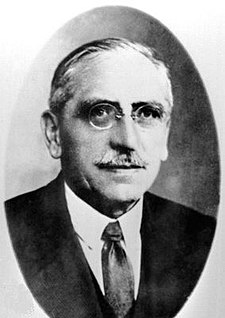 Despite the fact that Borel, Baire, and Lebesgue all make deep discoveries that move the study of infinity forward, eventually they all reject some basic notions of infinite set theory.
Ernst Zermelo (another mischievous German) comes up with this notion of the "axiom of choice," which all three of the French trio reject.
Kind of bizarre for me to read, really, because the very first day of Real Analysis in grad school was using the axiom of choice to generate a set that isn't Lebesgue measurable. History is full of irony.
In any case, Borel goes all hard-core and starts saying that the only entities that really exist in mathematics are those that can be constructed in finite steps. He abandons his older pursuits and focuses on more "useful" mathematics. Lebesgue can't quite divorce himself from the study of the continuum, but he's rather stuck without certain philosophical tools.
Baire becomes another victim of mental illness in this story of infinity. His already unstable mind isn't helped by the fact that he can't seem to find any way forward through the "intellectual abyss" created by the problem of the infinite.
Meanwhile, lurking around the corner seems to be a glimmer of progress in these Name-Worshiping Russian mathematicians who are about to be introduced in Chapter 4. Their secret seems to lie in being open to precisely what the French are closed off to: allowing metaphysics to mix with mathematics.
This has been a good read so far. It's keeping me awake at night, to be sure. It also makes me hope I don't go crazy. Why is there such a strong connection between mathematics and insanity, anyway?
One thing I'm seeing in these first few chapters is that perhaps there really is a need in all of us to embrace mystery, and accept what we cannot understand. Maybe it really can drive a mind insane to try to iron out all the details of a rational system that may simply have boundaries that we can never see.
Mathematics and mystery... at first they don't seem to go hand in hand, but the more I think about it, the more I think they do.
Anyway, I'm excited to continue on through this book!
Friday, September 25, 2009
Grading
This week has basically been consumed by teaching. I teach a section of Applied Calculus at UVA--it's my first year ever teaching a class. It's quite an experiment, really. Let's take a bunch of grad students, who have been admitted to the PhD program entirely because of academic merit in mathematics and not whatsoever on teaching merit, and throw them in front of some college freshmen (oh, I'm sorry, "first-years," as we say at UVA). Surely some learning will take place.
Tuesday was my students' first of three mid-term exams. I felt like it went well. There's nothing quite like grading an exam. Even in mathematics, it's highly subjective. The only time it isn't subjective is when the answer is entirely correct. I guess that does make it different from, say, grading a paper in philosophy. Is there ever an entirely correct answer in philosophy? This in itself is a philosophical question, of course... but the practical answer is, "no."
Subjectivity naturally comes into play, because for any given problem, a significant percentage of my students will have written something not 100% correct, and then I'm faced with the tricky problem of trying to measure how much understanding the answer communicates. How do you quantify understanding? Sometimes the whole process seems absurd.
I'm conditioned to expect a certain grade distribution, and I can kind of use this expectation to judge the validity of the grades I have come up with for my students. The truth is, though, I desperately try to find things that I can give credit for. Any signs of intelligent thought are rewarded with points.
Mathematics could be the most easily self-regulated discipline in the world. Every mathematician is highly critical by nature. One simply cannot succeed in mathematics without having this irrepressible urge to spot every important detail in a problem and verify it. Thus, if you tell any mathematician to grade a collection of calculus exams, his first inclination is simply to rip every answer to pieces.
Yet that same critical impulse generally causes me to turn inward and ask myself, what purpose would it serve to be hyper-critical of responses on a calculus exam? That combined with a genuine caring for my students as people causes me to try to find the best in every solution.
I never have to worry that I'm being overly generous. It is simply not physically possible for a mathematician to go above a certain threshold in giving credit for only partially correct solutions. The mistakes that appear in answers students give can range from humorous to painful, but in any case I just can't ignore them. No matter how much credit I want to give a student, I am forever bound by a mysterious force beyond my power to be more honest in my grading than perhaps my students would like me to be.
It's pretty brilliant, isn't it? The department never has to look over my shoulder to see if I'm actually being an ethical grader. They know that I am already constrained by a power far greater than any threats that bureaucracy might employ to keep me on track.
All of this is not to say that all of us grad students grade our students the same way. Sometimes we don't agree on what exactly the students are expected to understand about a problem. Math has this attractive quality to it because it is so objective, but setting learning goals for students (and then measuring success) is a more or less entirely subjective matter.
I could make it entirely objective, of course--each answer would be either right or wrong, no in between. But this probably would be the most unethical way to grade, because it would completely rob students of any way to communicate their ability to develop some sort of problem solving strategy, which is actually what we're trying to teach. Math, as it turns out, is not really about the answer.
When it comes right down to it, every academic discipline, math and the hard sciences included, are mostly about creating a dialog about something we wish to understand better. The reason we grade our students is to try to get them to make their ideas clearer, not just "right." There's something deeply personal about the whole thing, actually.
What's sad is how so many students go on asking what's going to be good enough--good enough for you, the teacher, to find them acceptable enough to label with an 'A' so they can go on and accomplish their own goals quite apart from anything you've told them. If only they realized that they'd really earn their 'A' if only they opened themselves up to actually communicating ideas.
I suppose it's really just the difference between being a consumer and thinking of your teacher as a supplier of a good, and being a person and thinking of your teacher as another person. If you're just a consumer, you can certainly get your 'A,' but only because our culture encourages grade inflation (education is subject to market forces, after all). If you really want to understand the material, you have to move from being a consumer to being a real person desiring real communication.
I understand why many students can't move this direction. I'm actually quite okay with most students in my class not caring about math. I'll do my best to be a supplier of a good--maybe if they work hard, I can even supply 'A's for them. There is, after all, a certain level of dignity in that kind of transaction.
But being a teacher, while also being a student, has caused me to reflect that what's really behind all those commands to "show your work" is a desire for something more personal. I wonder if my students will ever get that.
Sunday, September 20, 2009
Cereal
This
Is
AWESOME.

The satirical blog that came up with this isn't bad, although committed Calvinists may take offense.
By the way, I was in Geneva last year and saw a genuine Calvin food product--check it out.
Is
AWESOME.
The satirical blog that came up with this isn't bad, although committed Calvinists may take offense.
By the way, I was in Geneva last year and saw a genuine Calvin food product--check it out.
Subscribe to:
Posts (Atom)